
Wire Terminal Breakout Boards in South Africa: Selection, Wiring, and Real-World Pitfalls
Engineer's guide to wire terminal breakout boards in South Africa: choose by pitch, current rating, and wire range, wire them correctly, and source locally from Communica.
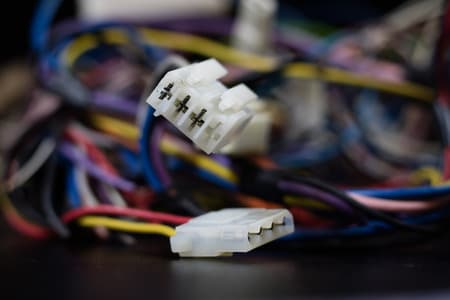
Interface, Not Just Connector
Breakout boards solve strain relief, wire-size translation, and power/signal separation in one part.
Read Beyond the Headline Specs
Terminal pitch, wire range, copper weight, and derating determine real-world current capacity.
Local Stock Saves Schedule
Branch collection, VAT invoicing, and spares availability reduce project risk and callout time.
Why a Bare PCB Pad Is Not a Field Connection
Most boards arrive with 0.1-inch header pads, JST connectors, or surface-mount test points. Those are fine on a bench. They are not fine when the board goes into a panel, a gate motor enclosure, a conveyor control box, or a student project that gets moved every week. The weak link is rarely the electronics - it is the wire interface. A screw-terminal breakout board exists to move that interface off the delicate PCB and onto a mechanical termination that survives vibration, repeated connection cycles, and a technician with a screwdriver. If you have ever replaced a ripped header after a field failure, you already understand the value proposition.
This guide is not a catalogue walk-through. It is a working engineer's view of how to specify a breakout board for South African conditions: short run lengths, mixed mains and low-voltage wiring, and projects that must be serviceable by someone who did not build them. You can browse the full range of interconnect and terminal hardware in the connectors, wire and cable collection, but first work out what the board has to do.
The Three Interface Problems a Breakout Board Actually Solves
It is tempting to treat every breakout board as the same passive part. In practice they solve three distinct problems, and the one you need determines the board you buy.
1. Mechanical strain relief
A screw terminal clamps the conductor. That clamp transfers cable tension into the terminal block body, not into the solder joint on the PCB. For DIN-rail mounted controllers or anything with a cable gland entry, this is the deciding factor. Look for terminal blocks that are through-hole soldered with more than one pin per contact - a two-pin footprint per terminal spreads the load and resists rocking.
2. Conductor size translation
Header pins accept 0.1-inch dupont leads, typically 24-28 AWG. Field wiring is often 0.5 mm² to 2.5 mm² (roughly 20-14 AWG). A breakout board bridges that gap. The relevant specification is the terminal's rated wire range, usually printed on the block or in the datasheet, not the pitch of the PCB header.
3. Safe separation of power and signal
On mixed-voltage boards, layout matters. A good breakout PCB keeps mains or 24 V tracks physically separated from logic-level tracks, and often provides a dedicated high-current path for the supply. A poor one routes everything through the same thin trace. Ask for the board's copper weight and trace width if you are switching more than an amp.
Reading the Spec Sheet Like a Technician
Vendor listings show pitch, pin count, and a current rating. Those headline numbers hide most of what matters. Here is how to interrogate a listing before you commit.
| Specification | What it really tells you | Common trap |
|---|---|---|
| Terminal pitch | Spacing between screw centres; determines wire size and creepage | 3.5 mm pitch cannot take 2.5 mm² comfortably; 5.08 mm can |
| Rated current per contact | Continuous current through one terminal at a stated temperature rise | Ratings assume a specific wire gauge and ambient; derate for enclosed boxes |
| Rated voltage | Insulation withstand between adjacent poles | Mixing 230 V and 3.3 V on a 3.5 mm-pitch board is poor practice |
| PCB copper weight | 1 oz vs 2 oz changes current capacity of traces, not terminals | A 10 A terminal on a 1 oz trace is a 3 A board |
| Mounting hole pattern | Whether it fits your enclosure or DIN clip | Hole spacing rarely matches generic enclosures; check before drilling |
A useful sanity check: if the listing does not state wire range in mm² or AWG, treat the current rating as optimistic. Reputable blocks from Phoenix Contact, Wago, or Degson publish full derating curves. Communica stocks a broad spread of these terminal families alongside generic boards, which means you can often match a board to a specific block rather than accept whatever is pre-fitted.
Related Connectors, Wire & Cable Products
Discover quality connectors, wire & cable products related to Wire Terminal Breakout Boards in South Africa: Selection, Wiring, and Real-World Pitfalls

Edl Compatible With Arduino Adapter Shield V3 (tft01 Itdb02 Compatible) For Arduino Uno
Edl Compatible With Arduino Adapter Shield V3 (tft01 Itdb02 Compatible) For Arduino Uno

Arduino Compatible Pro Micro 328-5v/16mhz. Using Atmega32u4 (built In Usb Peripheral)
Arduino Compatible Pro Micro 328-5v/16mhz. Using Atmega32u4 (built In Usb Peripheral)

360 Degree Rotation Ky-040 Rotary Encoder Module - 5v
360 Degree Rotation Ky-040 Rotary Encoder Module - 5v

Usb To Rs485 Ttl Serial Converter Adapter
Usb To Rs485 Ttl Serial Converter Adapter

Cd74hc4067 Analog Digital Multiplexer Breakout Board Module 16 Channel
Cd74hc4067 Analog Digital Multiplexer Breakout Board Module 16 Channel

Timer Relay Board 12v 0-10s
Timer Relay Board 12v 0-10s

Trigger Delay Timer With Usb
Trigger Delay Timer With Usb

Iic/i2c Interface Adapter Board Module
Iic/i2c Interface Adapter Board Module

Trigge Delay Timer 24h 5-30v - Relay Switch Module For 24 Hour Timing Control
Trigge Delay Timer 24h 5-30v - Relay Switch Module For 24 Hour Timing Control

Sd/micro-sd Card Breakout Module
Sd/micro-sd Card Breakout Module

8ch Logic Level Converter
8ch Logic Level Converter

Gpio Extention Board| Raspberry Pi Expansion Board | Compatible With Pi 2,3,4 | Easy Plug And Play
Gpio Extention Board| Raspberry Pi Expansion Board | Compatible With Pi 2,3,4 | Easy Plug And Play
Wiring Practice That Prevents Callbacks
Most breakout board failures are installation failures, not component failures. Three habits will eliminate the majority of them.
Strip length and ferrule discipline
Screw terminals clamp bare stranded wire poorly: strands spread, some escape the clamp, and the connection heats. For stranded cable, crimp a bootlace ferrule to the correct strip length - typically 6-8 mm for 5.08 mm pitch blocks. For solid wire, strip to the depth marked on the block and no more. A wire inserted too far can short to the adjacent pole inside the housing.
Torque, not force
Small terminal screws strip easily. A 2.5 mm blade screwdriver and a firm nip is enough; the goal is to compress the clamp, not to deform the housing. If you are terminating dozens of points, a torque screwdriver set to the block manufacturer's figure (often 0.4-0.5 Nm for small blocks) pays for itself on the first panel.
Label before you land
Breakout boards concentrate many conductors in a small area, and colour coding alone breaks down once you have more than a handful of signals. Label each core at both ends with a printed or written tag. On multi-board builds, a simple terminal schedule taped inside the enclosure saves hours during commissioning.
Matching the Board to the Job
Not every application needs the same board. The table below maps common South African use cases to the specification that matters most.
| Application | Priority spec | Practical note |
|---|---|---|
| PLC / relay panel retrofit | DIN-rail mountable, 5.08 mm pitch | Choose boards with a clip footprint or plan an adapter plate |
| Student project / lab kit | 2.54 mm header to 3.5 mm terminal | Low cost, reusable; keep a few in the parts drawer |
| Gate motor / perimeter device | Vibration resistance, locking terminals | Prefer rising-cage clamps over leaf-spring types |
| Sensor run over 10 m | Shielded cable termination | Tie shield to chassis at one end only |
If your build is still at the prototype stage, it is worth checking the full product index for board variants before committing to a layout - pin counts and footprints vary more than the category name suggests.
Sourcing in South Africa: What to Plan For
Importing a breakout board usually costs more in admin than the part itself. Local stock changes the economics: you can order a single board for a fault-find, collect from a branch the same day, and receive a VAT invoice for the project. Communica holds stock across its Samrand head office and the Pretoria and Cape Town branches, so it is worth checking the branch trading hours if you need a counter collection. For education and small production runs, buy two or three spares - terminal blocks are the most commonly damaged part in a shared lab.
Objection worth naming: breakout boards can seem expensive relative to a bare header. The comparison should be against the cost of a field repair, not the cost of a connector. A R60 board that prevents a R600 callout is not a luxury. If your design is moving into repeat production, a breakout board also simplifies assembly instructions and reduces the skill level required on the line.
Finally, match the brand to the duty. For lab and hobby work, general-purpose blocks are perfectly adequate. For panels that will be serviced repeatedly over years, specify a recognised terminal brand - you can filter by manufacturer using shop by brand. Either way, the board is the cheap part of the interface. The cost lives in the labour around it, so specify once, wire it properly, and label it - your future self, or the technician who follows you, will thank you.
Communica supplies semiconductors and electronic components to industries such as automotive, electrical, automation, mining, and education.
Disclaimer: This content is for educational purposes only. Product availability, pricing, and specifications are subject to change. Always verify current details on the retailer's website before making a purchase. We may earn affiliate commissions from qualifying purchases.


Frequently Asked Questions
Get answers to common questions about Connectors Wire And Cable
Why Choose Communica?
*Free Shipping
Free shipping for orders over ZAR 1,000.00.
7-Day Returns
Get a full refund if you had the product for less than 7 days.
Quick Delivery
Nationwide delivery within 2 - 4 working days.
