
What Are Temperature Control Sensors Used For? A South African Electronics Guide
Learn what temperature control sensors are used for across industrial, hobbyist, and engineering applications. See common types, local availability, tips, and project ideas.
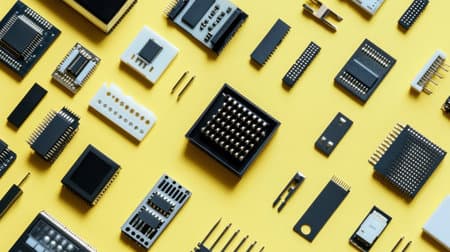
Diverse Sensor Applications
Used in automation, appliances, labs, and maker projects across SA.
Choosing the Right Sensor
Selection depends on accuracy, range, response time, and interface.
Local Stock & Support
Find sensor types and brands at Communica with expert advice.
Overview: Temperature Control Sensors in South Africa
Temperature control sensors are vital components in modern electronics, ensuring that everything from home appliances to industrial automation systems operates within safe and efficient thermal limits. In South Africa, these sensors find applications across sectors-from student engineering projects and classrooms, to food processing plants, data centres, and smart homes. Makers and technicians rely on them for both safety and innovation, using locally available sensor modules and boards for rapid prototyping or production-scale builds.
Communica stocks a comprehensive range of temperature control sensors including thermistors, thermocouples, resistance temperature detectors (RTDs), semiconductor IC sensors, and digital modules compatible with Arduino, Raspberry Pi, and industrial PLCs. Whether you're building a thermal monitoring system for a greenhouse or automating HVAC control in a commercial building, understanding the working principles and applications of these sensors is key to a successful selection.
Common Uses of Temperature Control Sensors
- Industrial process control (furnaces, chemical plants, HVAC automation).
- Consumer electronics (kettles, fridges, ovens, air conditioners).
- Data centre, laboratory, and server room thermal monitoring.
- Vehicle engine management (coolant, exhaust, cabin climate).
- Medical refrigeration, pharmaceutical storage, and vaccine cold chains.
- Maker and STEM projects (robotics, IoT weather stations, incubators).
Types of Temperature Control Sensors
| Sensor Type | Typical Range | Common Applications | Popular Part Numbers |
|---|---|---|---|
| NTC Thermistor | -40 degreesC to +125 degreesC | Electronics, HVAC, battery packs, maker projects | B57560G104F, MF52 |
| Thermocouple (e.g. K-type) | -200 degreesC to +1250 degreesC | Furnaces, ovens, process automation | TC-K-01, MAX31855 modules |
| RTD (e.g. PT100) | -200 degreesC to +850 degreesC | Lab, process industries, food safety | PT100, PT1000, MAX31865 modules |
| Semiconductor IC | -55 degreesC to +150 degreesC | PCs, white goods, IoT nodes | LM35, DS18B20, MCP9808 |
| Digital I2C/SPI Modules | -40 degreesC to +125 degreesC | Embedded, Arduino, Raspberry Pi, smart home | DHT22, SHT31, BMP280 |
When selecting a sensor, consider not just temperature range, but also accuracy, speed, ease of connection, and conflicting electrical environments (e.g. industrial EMI or long cable runs). Many types, such as the DS18B20 or thermocouple module kits, are widely used in both prototyping and commercial deployments across South Africa thanks to their robust support and ready availability at Communica's branches and web store.
How Temperature Sensors Support Local Projects
A typical SA STEM project may use a DS18B20 digital sensor to monitor and control classroom incubators, or pair a PT100 RTD with a temperature controller for industrial fermentation vats. In smart homes, digital modules drive heating/cooling automation through software platforms like Home Assistant or Node-RED, often built atop Raspberry Pi or ESP32 boards, all of which can be sourced locally.
Related Sensors & Semiconductors Products
Discover quality sensors & semiconductors products related to What Are Temperature Control Sensors Used For? A South African Electronics Guide

Ema Ta1004 Programmable Temp Sensor Stainless Steel -40 - +150 Deg. C 4-20ma Output 1 Npn/pnp Output 2 - M18 X 1,5 External Thread Ip68
Ema Ta1004 Programmable Temp Sensor Stainless Steel -40 - +150 Deg. C 4-20ma Output 1 Npn/pnp Output 2 - M18 X 1,5 External Thread Ip68
Key Selection Criteria and Application Advice
- Accuracy: Precision required in 0.5 degreesC (lab, food safety) vs 2 degreesC (consumer appliances).
- Temperature Range: Does your process exceed 125 degreesC? Choose thermocouple or RTD over an IC sensor.
- Response Time: Thin, small sensors respond faster-critical for automated protection.
- Interfacing: Analog outputs (LM35, thermistor voltage dividers), digital (DS18B20, I2C/SPI), or wireless (LoRa/BLE modules).
- Mounting/Packaging: Probe, TO-92, SMD, waterproof casing-match to your environment.
- Availability & Lead Times: Check local stock for urgent projects; Communica provides VAT invoicing and branch pickup to simplify procurement for schools and businesses across South Africa.
Basic Calculations: Using a Thermistor in a Voltage Divider
NTC thermistors are often used as a temperature-to-voltage sensor with a simple divider:
| Vout = Vin x (RT / (RT + Rfixed)) |
|---|
Where Vin is typically 3.3V or 5V, RT is the thermistor resistance at current temperature, and Rfixed is your chosen reference resistor. By reading Vout with an ADC, you can infer temperature using a lookup table or the Steinhart-Hart equation.
Real-World Example: Data Logger for Cold Storage
A small cold room in Cape Town uses a DS18B20 digital sensor wired on a bus to an ESP32 running ESPHome. Temperature readings log to a cloud dashboard, and alerts trigger if temperatures exceed set limits (for food safety). System build cost is affordable, with parts available from Communica for fast replacement or maintenance.
Troubleshooting Tips
- Sensor Misreads: Check wiring polarity and cable lengths-digital sensors tolerate longer runs than analog types.
- Noise/Instability: Shield long cables, add bypass caps, and consider twisted pairs in industrial environments.
- Drift with Age: Thermistors and some ICs may drift. For mission-critical tasks, choose high-grade components and schedule regular calibration.
- Software Integration: Use open libraries (e.g., Arduino OneWire, Python) and verify both sensor and microcontroller compatibility ahead of procurement.
Explore More & Further Reading
To compare specs and shop a full range of temperature sensors, visit the Sensors & Modules Collection or browse by Brand for trusted global lines like Amphenol, Adafruit, and TE Connectivity.
Sources
Communica supplies semiconductors and electronic components to industries such as automotive, electrical, automation, mining, and education.
Disclaimer: This content is for educational purposes only. Product availability, pricing, and specifications are subject to change. Always verify current details on the retailer's website before making a purchase. We may earn affiliate commissions from qualifying purchases.

Frequently Asked Questions
Get answers to common questions about Sensors And Semiconductors
Why Choose Communica?
*Free Shipping
Free shipping for orders over ZAR 1,000.00.
7-Day Returns
Get a full refund if you had the product for less than 7 days.
Quick Delivery
Nationwide delivery within 2 - 4 working days.
