
Temperature Sensing Devices: Guide to Choosing Sensors for Makers and Engineers in South Africa
Comprehensive guide to temperature sensing devices: types, specs, wiring examples and South Africa procurement tips for makers, students and engineers.
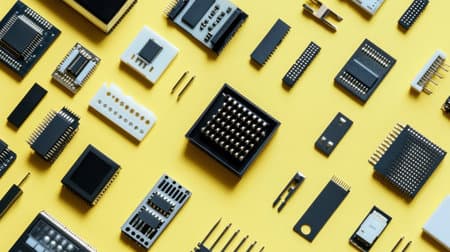
Sensor types explained
Thermistors, RTDs, thermocouples and digital sensors compared for common uses.
Selection checklist
Match range, accuracy, interface and response to your project needs.
South Africa procurement tips
Branch pickup, VAT invoices and local brand options to plan orders.
Overview: what is a temperature sensing device?
A temperature sensing device measures thermal conditions and converts temperature into an electrical signal for display, control or data logging. This guide covers common sensor types used by South African makers, students, technicians and engineers - including thermistors, RTDs, thermocouples and semiconductor temperature sensors - and explains how to choose and apply them in circuits and systems. Across the guide the term "temperature sensing device" is used to describe these sensor technologies and practical modules you can source locally.
Common sensor types and where they excel
Thermistors (NTC/PTC)
Thermistors are resistive devices whose resistance changes non-linearly with temperature. Negative Temperature Coefficient (NTC) thermistors are common for precise readings in a limited range (-40 to +150°C typical). They are inexpensive and widely used for temperature compensation, battery monitoring and student experiments.
RTDs (Resistance Temperature Detectors)
RTDs, often using platinum (PT100, PT1000), provide stable and repeatable readings with near-linear response over wide ranges. They suit higher-accuracy laboratory and industrial tasks where long-term stability matters.
Thermocouples
Thermocouples produce a millivolt signal proportional to the temperature difference between two junctions and are best for wide temperature ranges and fast response. They require cold-junction compensation and an amplifier or dedicated converter for microcontroller reading.
Semiconductor temperature sensors and modules
Semiconductor sensors (e.g., LM35, TMP36, digital I2C sensors like the DS18B20, SHT3x) provide linear voltage or digital outputs, making them easy to interface with microcontrollers. They are popular in education and IoT prototypes because of simplicity and digital bus options.
Standards, key specifications and comparison
When evaluating a temperature sensing device, compare these specifications to your application needs: range, accuracy, resolution, response time, stability, linearity, self-heating, required excitation/current and interface (analogue vs digital). The table below summarises typical spec ranges for common sensor families.
| Sensor Type | Typical Range | Typical Accuracy | Output / Interface |
|---|---|---|---|
| NTC Thermistor | -40 to +125°C | ±0.1 to ±1.0°C (depends on calibration) | Resistance (requires divider or ADC) |
| PT100 / PT1000 (RTD) | -200 to +600°C (type-dependent) | ±0.1 to ±1.0°C | Resistance (3/4-wire recommended for accuracy) |
| Thermocouple (K/J/T) | -200 to +1372°C (type-dependent) | ±0.5 to ±5°C (requires compensation) | mV (needs amplifier/ADC with cold-junction compensation) |
| Digital sensors (DS18B20, SHT3x) | -55 to +125°C (varies) | ±0.5 to ±2.0°C | 1-Wire, I2C, SPI, UART |
Selection criteria: matching sensor to your project
Start by defining the application requirements: target temperature range, required accuracy, environment (humidity, condensation), mechanical form factor, response time and budget. For classroom projects a digital sensor like DS18B20 or an I2C breakout (SHT3x for humidity + temperature) is often fastest to implement. For laboratory and process control, RTDs or calibrated thermistors are preferable. For high-temperature or harsh environments, thermocouples paired with proper amplifiers are suitable.
Practical selection checklist
- Define range and accuracy requirements (±0.5°C vs ±2°C changes component choice).
- Decide interface: analogue ADC vs digital bus (I2C, 1-Wire) for wiring simplicity.
- Consider response time and thermal contact-use probes or beads for fast response.
- Account for self-heating in low-power battery designs; choose low-excitation options.
Local note: Communica stocks a wide range of sensor modules and components across brands; check product categories to compare options and lead times. For branch collection and opening hours see the branches page linked below.
To explore available parts and modules, browse sensor and component categories on the Communica collections page or the shop by brand index.
Related Sensors & Semiconductors Products
Discover quality sensors & semiconductors products related to Temperature Sensing Devices: Guide to Choosing Sensors for Makers and Engineers in South Africa

Ema Ta1004 Programmable Temp Sensor Stainless Steel -40 - +150 Deg. C 4-20ma Output 1 Npn/pnp Output 2 - M18 X 1,5 External Thread Ip68
Ema Ta1004 Programmable Temp Sensor Stainless Steel -40 - +150 Deg. C 4-20ma Output 1 Npn/pnp Output 2 - M18 X 1,5 External Thread Ip68
Calculations and wiring examples
Ohm's law and thermistor divider
When using an NTC thermistor with a microcontroller ADC, a common approach is a voltage divider. Use Ohm's law and the divider equation to convert resistance to voltage.
Formulas:
Vout = Vs * (Rthermistor / (Rfixed + Rthermistor))
Then use the thermistor's Steinhart-Hart equation or a lookup table to map resistance to temperature. For many hobby thermistors a simplified Beta equation is sufficient.
Example: reading a DS18B20 (1-Wire) on a microcontroller
Wiring is straightforward: data line with a 4.7k pull-up resistor to 3.3V, and ground and Vcc connected. Many breakout modules include the pull-up and level-shifting for 5V microcontrollers.
  +3.3V
    |
   [4.7k]
    |----> DATA (1-Wire) ----> Microcontroller GPIO
    |
   DS18B20 Vcc
   DS18B20 GND ---> GND
Thermocouple interface overview
Thermocouples require an amplifier/ADC with cold-junction compensation (e.g., MAX31855, ADS1118 with appropriate front-end). Ensure amplifier type matches thermocouple type (K, J, T) and that connectors and compensation are correct.
Troubleshooting common issues
- Noisy readings: add decoupling capacitors, use shielded cable for long runs and average samples in software.
- Offset errors: verify reference voltages and cold-junction compensation for thermocouples.
- Slow response: improve thermal contact or use bead/probe versions instead of epoxy-packed sensors.
- Calibration drift: for precise work, use two-point calibration against a known standard and record calibration dates.
Practical South Africa notes: availability, brands and procurement
Availability and lead times can vary. Communica has a national footprint with the Samrand head office/warehouse and branches in Pretoria and Cape Town; branch pickup can reduce wait times for student labs and prototyping orders. For branch hours and collection details consult the temperature-sensing-devices-in-samrand page.
Popular sensor brands and maker favourites commonly stocked include Adafruit breakouts, generic DS18B20/NTC modules, and industrial RTD/thermocouple hardware. For detailed browsing use the online temperature-sensing-devices index or the homepage resources to plan purchases and check VAT invoice options for tertiary or departmental procurement.
Branches & trading hours | All products | Communica homepage
Application examples and cost context
Example 1 - Student weather station: use an SHT3x or DS18B20 for compact design, I2C or 1-Wire bus, and log to a microcontroller or single-board computer. Example 2 - Battery pack monitoring: NTC thermistors add cost-effective thermal sensing; ensure calibration and consider self-heating. Example 3 - Small laboratory setup: PT100/RTD with 3- or 4-wire connection and an accurate ADC or transmitter module.
Sources
Communica supplies semiconductors and electronic components to industries such as automotive, electrical, automation, mining, and education.
Disclaimer: This content is for educational purposes only. Product availability, pricing, and specifications are subject to change. Always verify current details on the retailer's website before making a purchase. We may earn affiliate commissions from qualifying purchases.

Frequently Asked Questions
Get answers to common questions about Sensors And Semiconductors
Why Choose Communica?
*Free Shipping
Free shipping for orders over ZAR 1,000.00.
7-Day Returns
Get a full refund if you had the product for less than 7 days.
Quick Delivery
Nationwide delivery within 2 - 4 working days.
