
Recommended Temperature Sensing Devices: Choosing the Right Sensor for Your Project
Find recommended temperature sensing devices (thermistors, RTDs, thermocouples, digital sensors) with practical selection tips, wiring examples and South African availability notes.
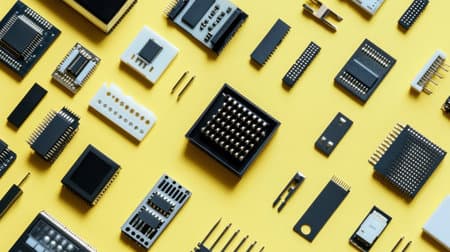
Sensor types
Thermistors, RTDs, thermocouples and digital sensors each suit different ranges and accuracy needs.
Practical tips
Match interface and protection to application; check local stock and branch pickup options.
Measurement basics
Use correct excitation, cold-junction compensation and shielded wiring to reduce errors.
Overview: types of temperature sensing devices
Temperature sensing devices convert thermal information into electrical signals. Recommended temperature sensing devices include thermistors, RTDs (resistance temperature detectors), thermocouples, semiconductor (analogue) temperature sensors, and digital sensors with integrated ADCs and communications (I2C, SPI, 1-Wire). Each class has trade-offs in accuracy, range, response time, cost and interfacing complexity.
Common types at a glance
- Thermistors - high sensitivity over limited range, low cost, good for temperature compensation and hobby projects.
- RTDs (e.g., PT100) - excellent accuracy and stability for industrial and lab use, require precise resistance measurement.
- Thermocouples (Type K, J, T) - very wide range and fast response, need cold-junction compensation and amplification.
- Analogue IC sensors (e.g., LM35) - linear voltage output, simple to read with ADCs.
- Digital sensors (e.g., DS18B20, SHT3x, BME280) - built-in conversion and calibration, communicate over I2C/1-Wire, easy to integrate with microcontrollers.
Key selection criteria
- Accuracy and resolution required by the application (±0.5°C vs ±0.1°C).
- Measurement range (freezing to high-temperature processes).
- Response time and thermal mass - bead sensors and exposed junctions respond faster.
- Interface: direct ADC, Wheatstone bridge, amplifier + ADC, or digital bus.
- Environmental protection: probe, waterproofing, or PCB-mounted sensor.
- Availability, lead times and local stock - Communica stocks many popular brands and components across branches.
Specification comparison table
| Sensor | Typical Accuracy | Range | Interface |
|---|---|---|---|
| NTC Thermistor | ±0.2-1.0°C | -40°C to 125°C | Resistance (voltage divider) |
| PT100 (RTD) | ±0.1-0.5°C | -200°C to 850°C | Resistance measurement (3-wire/4-wire) |
| Type K Thermocouple | ±1-2°C | -200°C to 1260°C | mV (requires amp + CJC) |
| DS18B20 (digital) | ±0.5°C | -55°C to 125°C | 1-Wire |
| SHT3x (Temp+RH) | ±0.3°C | -40°C to 125°C | I2C |
Local availability matters. Check stock and branch collection options when planning projects - Communica's Samrand, Pretoria and Cape Town branches often carry digital sensors, thermistors and thermocouple accessories. See branch details at Branches & Trading Hours for collection windows and stock queries.
Practical interfacing notes
Thermistors are read as part of a voltage divider; use a stable reference resistor and ADC. RTDs need constant current excitation or precision bridge circuits. Thermocouples produce millivolt signals - use dedicated amplifiers (e.g., MAX31855/31856) with cold-junction compensation. Digital sensors simplify wiring: DS18B20 runs on a single data line, I2C sensors share an addressable bus.
For an introduction to component categories and to browse compatible sensor modules, see Communica's collections page at Shop by Category.
Related Sensors & Semiconductors Products
Discover quality sensors & semiconductors products related to Recommended Temperature Sensing Devices: Choosing the Right Sensor for Your Project

Ema Ta1004 Programmable Temp Sensor Stainless Steel -40 - +150 Deg. C 4-20ma Output 1 Npn/pnp Output 2 - M18 X 1,5 External Thread Ip68
Ema Ta1004 Programmable Temp Sensor Stainless Steel -40 - +150 Deg. C 4-20ma Output 1 Npn/pnp Output 2 - M18 X 1,5 External Thread Ip68
Calculations, examples and wiring diagrams
Ohm's law and simple thermistor calculation
Use a voltage divider to measure an NTC thermistor with an ADC. Basic formula for divider output:
Vout = Vin * (Rthermistor / (Rfixed + Rthermistor))
Example: Vin = 3.3V, Rfixed = 10k, measured Vout = 1.65V. Solve for Rthermistor: Rthermistor = Rfixed * Vout / (Vin - Vout) = 10k * 1.65 / 1.65 = 10k. Convert resistance to temperature using the thermistor beta equation or lookup table from the datasheet. For student projects, many thermistor suppliers provide tables to avoid complex maths.
Thermocouple wiring (ASCII diagram)
   [Thermocouple junction] ---(K wire +)---+---[AMP]--- MCU_ADC
                                           |
                                         (K wire -)

   Note: AMP includes cold-junction compensation and gain. Keep thermocouple wires continuous and avoid mixing metals to prevent measurement errors.
RTD measurement example (3-wire)
A common RTD setup uses a constant current source and a differential ADC. Voltage across PT100 indicates temperature: V = I * R. For I = 1mA and R = 100 ohm (0°C), V = 0.1V. Use lookup or Callendar-Van Dusen equation for precise conversion in professional contexts.
Troubleshooting common issues
- Fluctuating readings: ensure solid ground reference, decoupling caps, and stable ADC reference voltage.
- Slow response: reduce sensor thermal mass or expose sensor junction; use faster sensor types for dynamic monitoring.
- Offset errors with thermocouples: verify cold-junction compensation and proper amplifier wiring.
- Interference on long runs: use twisted pair and shielded cable, especially for thermocouples and analogue signals.
When specifying parts for classroom labs or production, account for procurement realities in South Africa: lead times can vary for specialised RTD modules or certain thermocouple connectors. For a broad product index to compare modules, probes and accessory parts, view Communica's all products listing at All Products. For brand-specific modules popular in maker communities (Adafruit, SparkFun compatible parts) check Shop by Brand.
Practical selection guide for South African projects
- Student workshops/prototypes: DS18B20, SHT3x, NTC thermistors for cost-effective accuracy and easy integration.
- Laboratory and calibration: PT100/RTD with 4-wire measurement for higher accuracy and stability.
- High-temperature or furnaces: thermocouples with appropriate sheath and amplifier modules.
- HVAC and environmental monitoring: digital I2C sensors like SHT or BME families for combined temperature, humidity and pressure.
For advice on stock, VAT invoicing for tertiary institutions, branch pickup or procurement quotes, review Communica's company information at About Us. If you need specific component suggestions for a project, checking current availability at your nearest branch is recommended - use the branch page referenced earlier to plan collection.
Sources
Communica supplies semiconductors and electronic components to industries such as automotive, electrical, automation, mining, and education.
Disclaimer: This content is for educational purposes only. Product availability, pricing, and specifications are subject to change. Always verify current details on the retailer's website before making a purchase. We may earn affiliate commissions from qualifying purchases.

Frequently Asked Questions
Get answers to common questions about Sensors And Semiconductors
Why Choose Communica?
*Free Shipping
Free shipping for orders over ZAR 1,000.00.
7-Day Returns
Get a full refund if you had the product for less than 7 days.
Quick Delivery
Nationwide delivery within 2 - 4 working days.
