
Panel Meters: Local Stock, Expert Selection, and Real-World Applications
Reliable panel meters for voltage, current, and process monitoring. In stock in Samrand, Pretoria, and Cape Town. Expert advice and fast delivery.
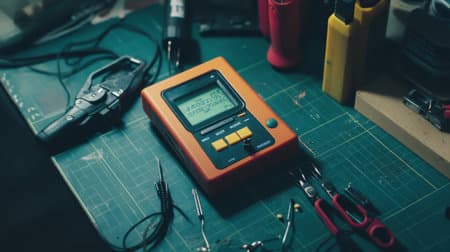
Local Stock, Fast Delivery
Panel meters in stock in Samrand, Pretoria, and Cape Town for same-day collection.
Analogue vs Digital
Choose based on precision, trend monitoring, and integration needs.
Expert Selection Support
Communica's team helps you match specs to your application.
Why Panel Meters Are Still Essential in a Digital World
In an age of wireless sensors and app-based monitoring, the humble panel meter remains a cornerstone for anyone who needs immediate, unambiguous readings on a control panel, test bench, or educational setup. Whether you're monitoring current draw on a robotics project, verifying voltage on a power supply, or building a custom instrument for a client, having a reliable meter that doesn't rely on a network or battery is often the difference between a quick diagnosis and a prolonged headache.
At Communica, we stock a comprehensive range of analogue and digital panel meters from trusted brands like Murata, Simpson, and Sifam. Our local inventory means you avoid long lead times and import hassles - critical when you're in the middle of a build or need to fulfill a procurement order quickly. With branches in Samrand, Pretoria, and Cape Town, you can collect the same day or have it delivered nationwide.
This guide will walk you through the key considerations when selecting a panel meter, from display type to accuracy and mechanical fit. We'll also share practical examples and application notes that reflect the real-world needs of South African makers, technicians, and engineers.
Analogue vs Digital: Which Panel Meter Suits Your Application?
The first decision is between analogue and digital displays. Each has distinct advantages, and the right choice depends on your use case.
Analogue Panel Meters
Analogue meters use a moving coil or moving iron movement to deflect a needle across a calibrated scale. They excel in applications where a trend or rate of change is more important than an exact number - for example, monitoring the charge current of a battery bank or observing the output of a variable transformer. Their simplicity means they don't require external power, are immune to electrical noise, and can handle overloads with less risk of permanent damage.
However, analogue meters have lower resolution and can be harder to read precisely. They are also sensitive to mounting orientation and shock. For portable or high-vibration environments, digital meters are usually preferred.
Digital Panel Meters
Digital panel meters provide a numeric readout via an LCD or LED display. They offer higher accuracy, resolution, and often additional features such as hold, min/max recording, and data logging. Many modern digital meters include serial communication (RS-485, Modbus) for integration into larger control systems.
Digital meters require a power source, typically 5V, 12V, or 24V DC, or 230V AC. They are ideal for precise measurements, automated systems, and applications where the reading must be transmitted or recorded. When selecting a digital meter, consider display size, viewing angle, and the need for a backlight in low-light conditions.
To explore our full range of panel meters, visit the All Products category on our website.
Key Specifications to Evaluate
Beyond the display type, you need to match the meter's electrical and mechanical specifications to your application. The following table summarises the critical parameters.
| Parameter | Description | Typical Options |
|---|---|---|
| Measurement Type | What the meter measures | AC/DC voltage, current, frequency, temperature, process signals (4-20mA) |
| Range | Full-scale value | e.g., 0-10V, 0-100A, 0-200°C |
| Accuracy | Maximum error as % of full scale | ±0.1% to ±2% |
| Display | Type and size | Analogue needle, 3.5-digit LCD, 4-digit LED |
| Power Supply | Required voltage for operation | Self-powered (analogue), 5V DC, 12V DC, 24V DC, 230V AC |
| Mounting | Panel cutout dimensions | Standard DIN sizes (48x48mm, 72x72mm, 96x96mm) |
| Input Signal | Direct or via shunt/transducer | Direct, current transformer (CT), shunt resistor |
When measuring current, you often need a shunt resistor or current transformer to convert high currents into a voltage or lower current that the meter can accept. For example, a 100A DC current can be measured using a 100A/75mV shunt, which produces 75mV at full scale. The meter would then be configured for a 75mV input.
Calculating Shunt Resistance
If you have a meter with a known full-scale voltage (Vfs) and you want to measure a maximum current (Imax), the shunt resistance (Rshunt) is calculated using Ohm's law: Rshunt = Vfs / Imax. For instance, if Vfs = 50mV and Imax = 20A, Rshunt = 0.05V / 20A = 0.0025Ω (2.5mΩ). The power dissipated by the shunt at full scale is P = Imax² * Rshunt = 400 * 0.0025 = 1W. Always choose a shunt with a power rating at least twice the calculated value for safety and thermal stability.
Selection Criteria for South African Conditions
South Africa presents unique challenges: voltage fluctuations, high ambient temperatures in some regions, and occasional supply chain delays. When specifying a panel meter, consider the following:
- Voltage Tolerance: Choose meters with a wide operating voltage range to cope with dips and surges. For 230V AC meters, a range of 85-265V AC is ideal.
- Temperature Range: Industrial environments can exceed 40°C. Select meters rated for at least 0-50°C, preferably -10 to 60°C.
- Local Stock: Communica holds stock of popular models in Samrand, Pretoria, and Cape Town. Check availability on our Branches & Trading Hours page to plan a collection.
- Education and Maker Use: For student projects, analogue meters are often more instructive as they show instantaneous trends. Digital meters with serial output are great for IoT and data logging.
- Brand Reliability: Brands like Murata and Simpson have a long track record in harsh environments. Browse our Shop by Brand page to see the full list.
For critical applications, always derate the meter's specifications by at least 20% to ensure longevity. Also, consider the panel cutout: measure twice before cutting, as a poorly fitting meter can compromise the ingress protection of an enclosure.
Related Test & Measurement Products
Discover quality test & measurement products related to Panel Meters: Local Stock, Expert Selection, and Real-World Applications

Truemeter Apm-shunt-apo Advanced Digital Panel Shunt Meter
Truemeter Apm-shunt-apo Advanced Digital Panel Shunt Meter

3 Wire Mini Digital Voltage Meter 0-100v Red
3 Wire Mini Digital Voltage Meter 0-100v Red

22mm 60-500v Mini Led Digital Panel Meter Blue Ip65
22mm 60-500v Mini Led Digital Panel Meter Blue Ip65

22mm 60-500v Mini Led Digital Panel Meter Green Ip65
22mm 60-500v Mini Led Digital Panel Meter Green Ip65

22mm 60-500v Mini Led Digital Panel Meter Red Ip65
22mm 60-500v Mini Led Digital Panel Meter Red Ip65

Communica Dpm/bmt Dig Dual 100v 100a Rd/bu Panel Meters
Communica Dpm/bmt Dig Dual 100v 100a Rd/bu Panel Meters


22mm Cutout Square Digital Red Led Ac Voltmeter 20-500v. Size:30x30. Green. Model Ad16-22avms
22mm Cutout Square Digital Red Led Ac Voltmeter 20-500v. Size:30x30. Green. Model Ad16-22avms

Mecstar Sd50 15ma Dc Amps Panel Meter - 45mm Shank - 51x51mm Size
Mecstar Sd50 15ma Dc Amps Panel Meter - 45mm Shank - 51x51mm Size

Mecstar Sd50 100madc Shank 45mm Dc Amps Panel Meter
Mecstar Sd50 100madc Shank 45mm Dc Amps Panel Meter

Hopesun Pm1 300vdc Panel Meter - Dc Amps, 15a Range, Shank 52mm, Size 70x60mm
Hopesun Pm1 300vdc Panel Meter - Dc Amps, 15a Range, Shank 52mm, Size 70x60mm

Hopesun Dc Amps Panel Meter - 15a Range, 52mm Shank, 70x60mm Size
Hopesun Dc Amps Panel Meter - 15a Range, 52mm Shank, 70x60mm Size
Installation and Wiring Best Practices
Proper installation ensures accurate readings and a long service life. Here are some practical tips from our technical team.
Wiring for Voltage Measurement
For DC voltage, connect the positive lead to the meter's positive terminal and negative to negative. For AC voltage, polarity doesn't matter, but use a fuse on the live line for safety. Keep wires twisted to reduce noise pickup. If measuring high voltages, use a voltage divider or potential transformer to bring the signal within the meter's range.
Wiring for Current Measurement
Never connect a current meter directly across a voltage source - it will act as a short circuit. Always place the meter in series with the load. For high currents, use a shunt or current transformer as described earlier. Ensure the shunt is mounted where it can dissipate heat, and use Kelvin connections (four-wire) for the best accuracy.
Shielding and Grounding
In electrically noisy environments, shield signal wires and ground the shield at one end only to avoid ground loops. For digital meters with communication, use twisted pair for RS-485 and terminate with 120Ω resistors at both ends of the bus.
A common mistake is to overlook the meter's input impedance. For voltage meters, a high input impedance (≥1MΩ) minimises loading of the circuit. For current meters, a low burden voltage (e.g., 75mV) reduces power loss.
Troubleshooting Common Panel Meter Issues
Even with careful selection, issues can arise. Use this quick guide to diagnose and resolve problems.
| Symptom | Possible Cause | Solution |
|---|---|---|
| Meter reads zero | No power, incorrect wiring, blown fuse | Check power supply and connections, replace fuse |
| Reading fluctuates | Loose connection, noise, faulty shunt | Tighten terminals, add shielding, replace shunt |
| Reading is inaccurate | Wrong range, calibration drift, shunt tolerance | Verify range, calibrate meter, use precision shunt |
| Display is dim or blank | Insufficient power, backlight failure | Check supply voltage, replace meter if backlight is critical |
For analogue meters, a bent needle or sticky movement often indicates physical damage. These meters are generally not field-repairable and should be replaced. Digital meters with firmware issues may require a reset; consult the datasheet for the procedure.
Real-World Applications in South Africa
Panel meters are used across diverse sectors. Here are a few examples that highlight their versatility.
- Renewable Energy: Monitoring battery voltage and solar panel output in off-grid installations. A 4-20mA digital meter can interface with a PLC for remote monitoring.
- Education: In university labs, students use analogue meters to study Ohm's law and digital meters to log data in physics experiments. Communica supplies many tertiary institutions with meters and accessories.
- Industrial Control: In manufacturing plants, panel meters provide local indication of motor current, tank levels, and temperature, often alongside a PLC.
- Audio Equipment: Vintage-style VU meters are popular for DIY audio projects, adding a retro aesthetic while providing useful signal level indication.
Whatever your application, choosing the right meter from a local supplier ensures you get technical support and fast replacement if needed. Communica's team can advise on the best model for your specific requirements - from simple 48x48mm analogue meters to advanced Modbus-enabled digital units.
Why Buy Panel Meters from Communica?
With over 45 years of experience, Communica is a trusted partner for electronic components in Southern Africa. We offer:
- Local Stock: Thousands of panel meters in our Samrand warehouse, ready for same-day collection or rapid delivery.
- Technical Expertise: Our staff understand the nuances of metering and can help you select the right product.
- Competitive Pricing: We leverage our volume to offer fair prices without compromising on quality.
- Convenient Branches: Visit us in Samrand, Pretoria, or Cape Town. See our About Us page for more details.
- VAT Invoicing: We provide proper tax invoices for businesses and educational institutions.
Don't let a missing meter stall your project. Browse our Collections to explore our full range, or contact us for a quote. With local stock and expert support, we make it easy to get the right meter for your needs.
Communica supplies semiconductors and electronic components to industries such as automotive, electrical, automation, mining, and education.
Disclaimer: This content is for educational purposes only. Product availability, pricing, and specifications are subject to change. Always verify current details on the retailer's website before making a purchase. We may earn affiliate commissions from qualifying purchases.


Frequently Asked Questions
Get answers to common questions about Test And Measurement
Why Choose Communica?
*Free Shipping
Free shipping for orders over ZAR 1,000.00.
7-Day Returns
Get a full refund if you had the product for less than 7 days.
Quick Delivery
Nationwide delivery within 2 - 4 working days.
