
How to Measure Temperature with Sensors: A Practical Guide for Makers and Engineers
Step-by-step guide to measuring temperature with thermistors, thermocouples, RTDs and digital sensors. Wiring, formulas, troubleshooting and SA procurement tips.
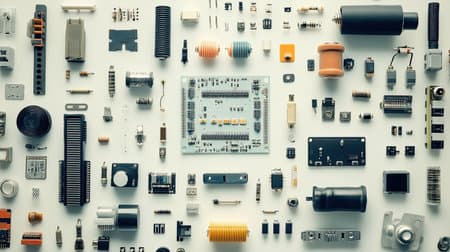
Choose by application
Match sensor range and accuracy to your project's requirements.
Wiring matters
Use correct wiring (2/3/4-wire, pull-ups, CJC) to reduce errors.
Local availability
Check Communica branch stock and plan for lead times.
Overview: Why accurate temperature measurement matters
Measuring temperature is a fundamental task in electronics, robotics, HVAC, and lab projects. Whether you are a student prototyping a data logger, a technician monitoring an oven, or a maker building an environmental sensor, choosing the right sensor and measurement method affects accuracy, response time, and reliability. This guide explains common temperature sensor types, how to read them, wiring examples, and selection criteria with South African availability and procurement notes.
Common sensor types and where to use them
- Thermistors (NTC/PTC): high sensitivity over limited ranges - good for hobby projects and thermostats.
- Thermocouples: wide temperature range and fast response - suitable for ovens and industrial probes.
- RTDs (resistance temperature detectors, e.g., PT100/PT1000): high accuracy and stability - used in lab and industrial measurement.
- Semiconductor (integrated) sensors (e.g., digital I2C/1-Wire like DS18B20, analogue voltage-output sensors like LM35): easy to interface with microcontrollers and ideal for many maker projects.
Key specifications to compare
When selecting sensors, compare accuracy, operating range, resolution, response time, and interface type. Below is a compact comparison table to help evaluate options:
| Sensor Type | Typical Range | Typical Accuracy | Interface |
|---|---|---|---|
| NTC Thermistor | -50 to 150°C | ±0.1-1.0°C (depends on calibration) | Analogue (voltage divider) |
| Thermocouple (Type K) | -200 to 1260°C | ±0.5-2°C (with cold-junction compensation) | Analogue (mV), requires amplifier |
| RTD (PT100) | -200 to 850°C | ±0.1°C (with good excitation and ADC) | Resistance measurement (2/3/4-wire) |
| Digital IC (DS18B20, TMP102) | -55 to 125°C | ±0.5°C to ±2°C | 1-Wire, I2C, or SPI |
Selection criteria: match sensor to application
Ask the following questions: What temperature range do you need? How accurate must readings be? Is response time critical? Will the sensor be in direct contact with a surface or measuring ambient air? What interface does your microcontroller or data-acquisition system support? Consider mechanical form (probe, bead, PCB-mounted) and whether you need waterproofing or a sheath.
Practical South Africa procurement notes
Communica stocks a broad selection of sensors and accessories suitable for students and industry. For quick local collection, check stock availability and branch hours at the branches page branches page. For browsing categories like sensors and semiconductors, use the collections index collections index. If you prefer to compare brands and modules, visit the shop-by-brand page shop-by-brand page.
Basic formulas and measurement principles
Many sensors require conversion from resistance, voltage or digital counts into temperature. Useful formulas:
- Ohm's law: V = I × R - for sourcing a constant current through an RTD or measuring voltage across a thermistor divider.
- Power dissipation: P = V × I - ensure self-heating of thermistors/RTDs is negligible; minimise measurement current to reduce error.
Thermistor example (NTC) using a voltage divider
If Rfixed and NTC form a divider from Vcc, Vout = Vcc × Rntc / (Rfixed + Rntc). Use the thermistor's Steinhart-Hart equation or a lookup table to convert resistance to °C. For many hobby NTCs a simplified Beta equation is adequate.
Digital sensors
Sensors like DS18B20 or TMP102 return temperature directly over 1-Wire or I2C, which greatly simplifies wiring and calibration. Digital sensors typically have defined resolution (e.g., 0.0625°C for DS18B20 at 12-bit) and need proper pull-ups or bus termination. For integrating these with microcontrollers, see how to connect temperature sensors to microcontrollers.
Related Sensors & Semiconductors Products
Discover quality sensors & semiconductors products related to How to Measure Temperature with Sensors: A Practical Guide for Makers and Engineers

Ema Ta1004 Programmable Temp Sensor Stainless Steel -40 - +150 Deg. C 4-20ma Output 1 Npn/pnp Output 2 - M18 X 1,5 External Thread Ip68
Ema Ta1004 Programmable Temp Sensor Stainless Steel -40 - +150 Deg. C 4-20ma Output 1 Npn/pnp Output 2 - M18 X 1,5 External Thread Ip68
Wiring examples and ASCII diagrams
Below are compact wiring diagrams for common sensor types. Use the appropriate grounding and decoupling practices and observe polarity for analogue amplifiers.
1. DS18B20 (1-Wire) basic wiring
Microcontroller   ---+---- VCC (3.3V/5V)
                      |
                     [ ] 4.7k pull-up
                      |
                   Data pin -----+---- DS18B20 DATA
                      |          |
                   GND -----------+---- GND
2. RTD (PT100) 3-wire connection
Excitation + ---[PT100 lead A]---(PT100)---[PT100 lead B]--- Excitation -
                          |                              |
                        Lead C                         Sense input (3-wire ADC)
Use dedicated RTD ADCs or current sources and measure voltage drop to get accurate results.
Calibration, accuracy and troubleshooting
Calibration improves accuracy. For classroom or workshop use, calibrate digital sensors against an accurate reference (ice bath approx 0°C and a known-temperature source). Note common error sources: wiring resistance (important for RTDs), self-heating, ADC quantisation, poor reference voltage, and cold-junction errors for thermocouples.
Troubleshooting checklist
- Readings stuck or noisy: check power rails, decoupling capacitors, and ensure good ground connections.
- Offset error: verify calibration and check reference voltage stability on ADC channels.
- Slow response: consider sensor placement and thermal mass; use smaller probes or ensure air flow.
- Intermittent digital readings: verify pull-up resistor value and bus termination, and check wiring length and shielding.
Examples and South African scenarios
Example 1 - Student data logger: Use a DS18B20 sensor on a 1-Wire bus to log ambient temperatures with a microcontroller. Minimal wiring and software libraries make this ideal for coursework. Example 2 - Workshop oven monitoring: Use a Type K thermocouple with a thermocouple amplifier and cold-junction compensation for high temperatures; source the thermocouple probe and amplifier modules from local stock when possible to reduce lead time. Example 3 - Precise lab measurement: Use a PT100 with a 4-wire connection and a high-resolution RTD ADC to reach ±0.1°C after calibration.
Accessories and complementary items
- Probe sheaths, waterproof housings and cable glands for environmental projects.
- Signal conditioners, thermocouple amplifiers, precision voltage references and ADCs for higher accuracy.
- Calibration baths or reference thermometers for verification (note: budgets in ZAR may range from a few hundred to several thousand depending on precision).
Sources
Communica supplies semiconductors and electronic components to industries such as automotive, electrical, automation, mining, and education.
Disclaimer: This content is for educational purposes only. Product availability, pricing, and specifications are subject to change. Always verify current details on the retailer's website before making a purchase. We may earn affiliate commissions from qualifying purchases.

Frequently Asked Questions
Get answers to common questions about Sensors And Semiconductors
Why Choose Communica?
*Free Shipping
Free shipping for orders over ZAR 1,000.00.
7-Day Returns
Get a full refund if you had the product for less than 7 days.
Quick Delivery
Nationwide delivery within 2 - 4 working days.
