
Loading your content...
Learn how to choose the correct Ethernet cable, shielding, termination and testing for home, lab or office setups in South Africa. Practical selection checklist and local buying notes.
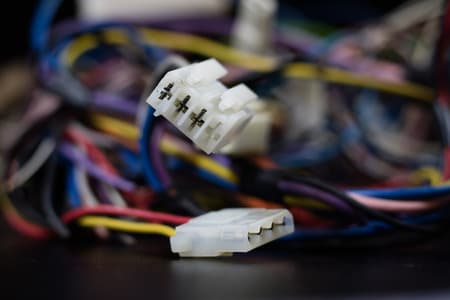
Pick Cat5e for 1Gb, Cat6/Cat6a for future 10Gb needs.
Use stranded patch leads for endpoints and solid cable in-wall.
Use STP near heavy EMI and plan for PoE heat on long runs.
Choosing the correct network lead affects speed, reliability, and future-proofing. Whether you are wiring a student lab, a maker workspace, or an office in South Africa, decisions about cable category, shielding, termination and run length determine whether you get the advertised throughput and stable PoE performance. This guide explains the differences between common cable types, how to size runs, when to use shielded cable, and practical tips for termination, testing and procurement from local suppliers like Communica.
Choose shielded cable (STP/F/FTP) where electromagnetic interference (EMI) is likely - for example, near heavy machinery, lifts, or large fluorescent lighting. For typical home and small-office environments, unshielded twisted pair (UTP) Cat5e/Cat6 is sufficient and easier to terminate. Remember: if you use shielded cable, all terminations and patch panels must support shielding to maintain effectiveness.
SA tip: In South African multi-tenant buildings with many Wi-Fi APs and electrical runs, consider Cat6a shielded where runs pass close to switchboards or long fluorescent fittings. Check local stock and lead times for shielded Cat6a; Communica lists both UTP and STP options in-store.
| Spec | What it means | Practical choice |
|---|---|---|
| Bandwidth (MHz) | Higher MHz generally supports higher data rates and lower crosstalk | Cat6: 250 MHz, Cat6a: 500 MHz |
| Max run length | Distance limit for rated speed (usually 100 m for Ethernet) | Use switches or fibre for runs >100 m |
| Conductor type | Solid vs stranded affects flexibility and termination | Solid for permanent, stranded for patch leads |
| Shielding | Reduces EMI, requires grounded terminations | Use STP in noisy electrical environments |
If your setup uses PoE (e.g., VoIP phones, access points, cameras), factor in power loss and cable heating. Higher current and long runs increase voltage drop; choose larger-gauge conductors or Cat6a/STP for better thermal performance. For example, PoE++ (up to 90 W) benefits from quality cable and correct terminations to avoid elevated temperatures in bundles.
A simple voltage drop estimate for DC powering over Ethernet pairs (approximate):
Voltage drop (V) ~ I (A) x R_total (Ohm). Cable DC resistance for 24 AWG ~ 84.2 Ohm/km per conductor. For a 100 m run using two conductors (round trip ~ 200 m): R_total ~ 0.0842 Ohm. At 0.5 A, Vdrop ~ 0.5 x 0.0842 = 0.0421 V (negligible). For higher currents and bundled runs, consult PoE planning guides and local hardware specs.
Use the T568B wiring standard for consistency unless a specific site standard requires T568A. Keep pair twists as close to the jack as possible - untwisting more than 13 mm (about 1/2 inch) can degrade performance. For wall plates, terminate solid cable to a keystone jack, then use a short stranded patch lead to connect devices.
RJ45 wiring (T568B)
Pin: 1 2 3 4 5 6 7 8
Color: W/O O W/G G W/B B W/br br
Home/Student Room: For gaming and streaming in a small apartment, a high-quality Cat5e or Cat6 UTP patch lead (stranded) from your router to PC (run under 10 m) is usually adequate.
Maker Lab / University Lab: Use in-wall solid Cat6 to a patch panel and 1 Gbps switches. If you expect 10 Gbps in the next 5 years, consider Cat6a to the lab benches and Cat6 patch leads for local devices.
Small Business Office: Use Cat6a for backbone and office floor runs where budget allows. For camera PoE deployments, select cable rated for higher PoE classes and test end-to-end performance, especially for runs approaching 100 m.
Note: When using figures in planning, state costs in ZAR and validate quoted lead times with suppliers; prices and availability vary across South Africa and may be estimates at the time of planning.
Communica supplies semiconductors and electronic components to industries such as automotive, electrical, automation, mining, and education.
Disclaimer: This content is for educational purposes only. Product availability, pricing, and specifications are subject to change. Always verify current details on the retailer's website before making a purchase. We may earn affiliate commissions from qualifying purchases.
Get answers to common questions about Connectors Wire And Cable
Free shipping for orders over ZAR 1,000.00.
Get a full refund if you had the product for less than 7 days.
Nationwide delivery within 2 - 4 working days.


