
Guide to Selecting Jumper Cables for Electronics Projects
Learn how to choose jumper cables for breadboards, sensors and microcontrollers. Practical tips for South African makers on pitch, gauge, connectors and local availability.
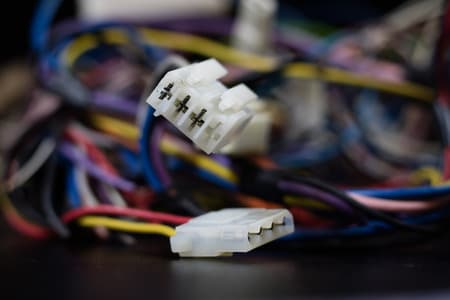
Match pitch & gender
Confirm header pitch and connector gender before buying jumpers.
Choose proper gauge
Select wire gauge by current and run length to limit voltage drop.
Separate power & signals
Keep power wiring apart from signal lines to reduce noise.
Overview: why jumper cables matter in prototyping
Jumper cables are the small but essential links between modules, breadboards, sensors and microcontrollers. Choosing the right jumper cables affects signal integrity, mechanical reliability and ease of debugging. This guide explains types, conductor and insulation choices, connector styles and practical selection criteria aimed at South African makers, students and lab technicians.
Common jumper cable types
- DuPont-style single-wire jumpers (male/female/male-female) for breadboards and headers
- Ribbon/IDC flat cables for multi-wire connections between boards and modules
- Pre-crimped pigtail assemblies for sensors and modules
- Hook-up wires for custom lengths and soldered connections
Connector styles and when to use them
Match connector gender and pitch to the header or terminal you will use. Typical pitches are 2.54 mm (0.1") for most development boards and 1.27 mm for smaller modules. Female jumpers mate with male pins, while male-to-male jumpers plug straight into solderless breadboards. For repeated insertions, choose cables with firmer housings and plated pins to reduce wear.
Conductor material, gauge and signal considerations
Conductor gauge affects resistance and mechanical strength. Common jumper wire gauges range from 28 AWG to 22 AWG. Thinner 28 AWG is fine for prototyping low-current signals; thicker 24-22 AWG is better for power connections and motors. When in doubt, keep sensor and logic signal wires separate from power wiring to reduce noise coupling.
| Wire gauge | Typical use | Approx. DC resistance |
|---|---|---|
| 28 AWG | Logic signals, breadboard jumpers | ~0.66 ohm/m |
| 24 AWG | Power to small modules, servo leads | ~0.26 ohm/m |
| 22 AWG | Higher-current lines, small motors | ~0.17 ohm/m |
Insulation and flexibility
PVC insulation is common and inexpensive. Silicone-insulated wires are more flexible and better for repeated bending or tight routing. If you expect heat or harsh lab environments, select insulation rated accordingly-consult product datasheets where available.
For a quick look at local availability and product types, browse Communica's collections: Shop by category or view the overall product index: All products.
Standards, pitch and compatibility basics
Most hobby jumper cables follow de facto standards like 2.54 mm pitch for headers and breadboards. When working with smaller development boards or SMT breakout boards, confirm the pitch (for example, 1.27 mm) before buying. Also check whether pins are shrouded or not-shrouded housings help prevent accidental shorting on multi-pin connectors.
Quick compatibility checklist
- Confirm header pitch (commonly 2.54 mm) and pin spacing.
- Match connector gender to target pins or sockets.
- Choose gauge suitable for expected current and run length.
- Prefer separate power and signal harnesses for noise-sensitive work.
If you need hands-on support or to collect parts quickly, check branch stock and hours at Communica: Branches & Trading Hours.
Related Connectors, Wire & Cable Products
Discover quality connectors, wire & cable products related to Guide to Selecting Jumper Cables for Electronics Projects


Test Lead Wire Pvc 1mm Square Black
Test Lead Wire Pvc 1mm Square Black

Test Lead Wire Pvc 1mm Square Green
Test Lead Wire Pvc 1mm Square Green


Test Lead Wire Pvc 1mm Square White
Test Lead Wire Pvc 1mm Square White

Test Lead Wire Pvc 1mm Square Yellow
Test Lead Wire Pvc 1mm Square Yellow
Selection criteria and practical calculations
Use the following steps to choose jumpers for a specific project: determine current, estimate run length, select wire gauge, then choose connector style. Ohm's Law and power equations help estimate voltage drop and heat in the conductor.
Helpful formulas
Ohm's law: V = I × R. Power dissipated in wire: P = I^2 × R. Use the table in the first section for approximate resistance per metre by gauge. Example: a 0.5 m run of 24 AWG (~0.26 ohm/m) carrying 1 A has R = 0.13 ohm, voltage drop V = 0.13 V and P = 0.13 W.
Example scenarios
- Logic signals (I < 20 mA): 28 AWG jumpers are usually fine; keep runs short to avoid capacitance effects.
- Sensor modules with small current draw: 26-24 AWG is suitable; use shielded cable for long analog runs if noise is an issue.
- Servos or small motors (I up to several hundred mA): 22-24 AWG recommended; use separate power jumpers to avoid injecting motor noise into logic lines.
Wiring diagram examples (ASCII)
Microcontroller to sensor (I2C example):

   MCU SDA  -----[ jumper ]----- SDA Sensor
   MCU SCL  -----[ jumper ]----- SCL Sensor
   MCU 3.3V -----[ thicker jumper ]----- VCC Sensor
   MCU GND  -----[ thicker jumper ]----- GND Sensor

Breadboard tip:
  Use male-to-male jumpers to connect MCU pins to breadboard rows, and male-to-female for modules with female headers.
Troubleshooting common jumper issues
- Intermittent connections: check for bent or loose pins and replace low-quality housings.
- Voltage drop on power lines: shorten run length or increase gauge; verify with a multimeter.
- Signal noise: separate power and signal wires and add decoupling capacitors near modules.
For testing and measurement tools commonly used with jumper wires, see Communica's test-and-measurement and tools ranges: Collections or browse makers' favourites and brands at Shop by Brand.
Local considerations and purchasing tips for South Africa
Stock levels and lead times can vary. For university projects and class kits, plan purchases ahead of term starts; Communica maintains a wide range from hobby jumpers to crimp housings and servo leads. If you need a VAT invoice or account quote for departmental procurement, request documentation when ordering and confirm pick-up options at the Samrand head office or other branches.
Practical checklist before buying:
- Confirm required pitch and connector gender.
- Decide on fixed-length kits vs. reel or bulk wire for custom crimping.
- Consider silicone insulation for repeated flexing applications.
- Check branch availability if you need same-day collection: Communica home.
Where to learn more
Hands-on practice with breadboards and different jumper types is the best teacher. For company background and supply footprint when planning larger purchases, see Communica's About page: About Communica.
Sources
Communica supplies semiconductors and electronic components to industries such as automotive, electrical, automation, mining, and education.
Disclaimer: This content is for educational purposes only. Product availability, pricing, and specifications are subject to change. Always verify current details on the retailer's website before making a purchase. We may earn affiliate commissions from qualifying purchases.


Frequently Asked Questions
Get answers to common questions about Connectors Wire And Cable
Why Choose Communica?
*Free Shipping
Free shipping for orders over ZAR 1,000.00.
7-Day Returns
Get a full refund if you had the product for less than 7 days.
Quick Delivery
Nationwide delivery within 2 - 4 working days.
