
Best Temperature Sensors for Hobby Projects in South Africa: A Complete Guide
Discover leading temperature sensors for Arduino, Raspberry Pi, and maker projects. Compare models, see local stock, and get expert hobbyist advice from Communica.
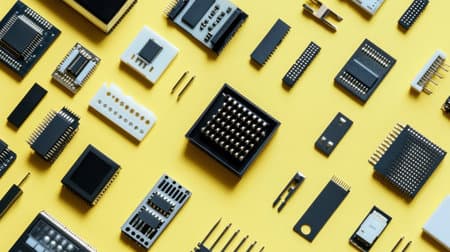
Top Sensor Choices Compared
See pros, cons, and specs for popular temperature sensors used in hobby designs.
Local Availability & Advice
Find out which models are commonly stocked in South Africa with fast local support.
Application Examples & Tips
Learn to select, wire, and troubleshoot sensors for your microcontroller projects.
Overview: Why Temperature Sensors Matter in Hobby Projects
Temperature sensors are essential components for weather stations, home automation, aquariums, 3D printers, environmental monitoring, and countless DIY electronics applications. For South African makers, choosing the right sensor means balancing accuracy, cost, wiring simplicity, and what's locally available. This guide compares the best options, explains how to select and use them, and shares practical prototyping advice.
Types of Temperature Sensors: Key Options for Makers
The most common temperature sensors for hobby projects fall into these categories:
- Thermistors (NTC/PTC) - inexpensive analog options for simple monitoring
- Semiconductor ICs (e.g., DS18B20, LM35, TMP36) - accurate, easy to interface
- Digital sensors with I2C/SPI/UART (e.g., DHT22, BME280) - multi-sensor and high-precision modules
- Infrared (non-contact) sensors (e.g., MLX90614) - for surface or distant object measurement
Comparison Table: Popular Hobbyist Temperature Sensors
| Model | Type | Accuracy | Range ( degreesC) | Interface | Notes |
|---|---|---|---|---|---|
| DS18B20 | Digital IC | 0.5 | -55 to +125 | 1-Wire | Waterproof versions, addressable |
| DHT22 | Digital Sensor | 0.5 | -40 to +80 | Single-wire | Also reads humidity |
| LM35 | Analog IC | 0.25 | -55 to +150 | Analog Vout | Good for Arduino, direct readout |
| NTC 10k Thermistor | Resistive | 1 | -55 to +125 | Analog (voltage divider) | Low-cost, requires calibration |
| BME280 | Digital IC | 1 | -40 to +85 | I2C/SPI | Measures temp, humidity, barometric pressure |
Key Selection Criteria for Hobbyists
- Accuracy needed: e.g., is 1 degreesC sufficient or do you need 0.1 degreesC?
- Interface: Analog (simple voltmeter/ADC) vs digital (microcontroller-read, less noise)
- Form factor: Standard IC, module, or waterproof encapsulated
- Environment: Indoor, outdoor, or special (liquid/probe needed?)
- Budget: Some advanced sensors/ICs are higher cost but add multi-sensor functions
Related Sensors & Semiconductors Products
Discover quality sensors & semiconductors products related to Best Temperature Sensors for Hobby Projects in South Africa: A Complete Guide

Ema Ta1004 Programmable Temp Sensor Stainless Steel -40 - +150 Deg. C 4-20ma Output 1 Npn/pnp Output 2 - M18 X 1,5 External Thread Ip68
Ema Ta1004 Programmable Temp Sensor Stainless Steel -40 - +150 Deg. C 4-20ma Output 1 Npn/pnp Output 2 - M18 X 1,5 External Thread Ip68
Wiring, Calculations and Example Projects
Simple Wiring Examples
Here's how you might wire two of the most common sensors:
- DS18B20: Requires a 4.7kOhm pull-up resistor between Vcc and Data; only three wires needed (Vcc, Data, GND).
- NTC Thermistor: Use a voltage divider circuit. Connect thermistor between Vcc and ADC input, and a known resistor to ground. The formula for reading temperature:
Vout = Vcc x (RB / (RT + RB))
- Vcc = input voltage
- RB = fixed resistor value
- RT = resistance of the thermistor (varies with temperature)
Use the Steinhart-Hart equation (available in many Arduino libraries) for more precise readings when converting resistance to temperature.
Typical Use Cases in South Africa
- Monitoring terrarium or aquarium temperatures using waterproof DS18B20 with an Arduino Nano
- Building a weather station or greenhouse automation project with DHT22 or BME280 modules (digital interface simplifies cabling)
- 3D printer bed/hotend temperature monitoring using NTC thermistors, common with locally available parts
- Smart home or IoT experiments with Raspberry Pi and I2C-connected BME280 for humidity and barometric extras
Troubleshooting Common Sensor Issues
- Unstable or noisy readings: Use short cables and proper pull-ups for digital types, add bypass capacitors for analog sensors.
- Incorrect data: Double-check wiring order (it's easy to swap Vcc/Data/GND).
- Module not detected: Check if addressing or bus conflicts occur on I2C/1-Wire lines.
- Calibration drift: Thermistors may need periodic calibration for high-accuracy builds.
Recommended Product Ranges and Brands
- Adafruit (modules and breakout boards)
- Maxim Integrated (DS18B20, digital ICs)
- Texas Instruments (analog ICs e.g. LM35)
- Bosch (BME/BMP digital sensors)
- Generic NTC/PTC thermistors (wide range; bulk packs for classrooms)
Sources
Communica supplies semiconductors and electronic components to industries such as automotive, electrical, automation, mining, and education.
Disclaimer: This content is for educational purposes only. Product availability, pricing, and specifications are subject to change. Always verify current details on the retailer's website before making a purchase. We may earn affiliate commissions from qualifying purchases.

Frequently Asked Questions
Get answers to common questions about Sensors And Semiconductors
Why Choose Communica?
*Free Shipping
Free shipping for orders over ZAR 1,000.00.
7-Day Returns
Get a full refund if you had the product for less than 7 days.
Quick Delivery
Nationwide delivery within 2 - 4 working days.
