
Best Practices for Installing Thermal Sensors in Electronics: A South African Guide
Discover expert tips for installing thermal sensors: optimal placement, wiring, calibration, troubleshooting, and local product options for South African engineers and makers.
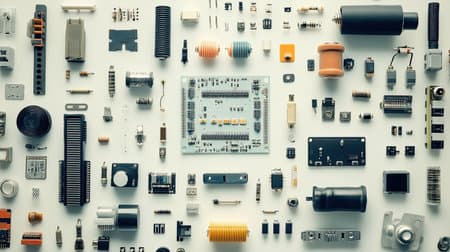
Placement Matters
Correct positioning reduces errors and improves sensor response time.
Wiring & Calibration Tips
Use proper cabling and calibration for reliable, accurate readings.
Local Sourcing Advice
Access popular sensor brands and support at Communica branches countrywide.
Overview: Why Thermal Sensor Installation Matters
Thermal sensors-such as thermistors, RTDs, thermocouples, and IC temperature sensors-play a vital role in protecting circuits, managing power, and optimizing system performance. Whether you are working on an industrial automation project, a student lab exercise, or maintaining critical infrastructure, proper installation is crucial for accurate and reliable temperature measurement.
Thermal Sensor Types and Key Specifications
| Sensor Type | Typical Accuracy | Response Time | Wiring Notes |
|---|---|---|---|
| Thermistor | 0.2 degreesC to 1 degreesC | Fast | 2-wire; watch for lead resistance |
| RTD (e.g. PT100/PT1000) | 0.1 degreesC to 0.5 degreesC | Medium | 3/4-wire preferred for accuracy |
| Thermocouple | 1 degreesC to 2 degreesC | Very Fast | Special cable, correct polarity |
| Digital IC (e.g. LM35, DS18B20) | 0.5 degreesC to 2 degreesC | Fast | 3-wire (VCC, GND, Data) |
Best Practices for Sensor Placement and Mounting
Correct sensor placement is critical for accuracy and fast response. Position your thermal sensor as close as safely possible to the component or region you want to measure-but avoid direct contact with power traces or noise sources. For example:
- Attach sensors to flat, clean surfaces for good thermal conduction (use thermal adhesive or paste if needed).
- Avoid mounting on areas exposed to airflow unless monitoring ambient temperature specifically.
- Shield sensors from external heat sources, sunlight, or motor enclosures to prevent skewed readings.
In South African industrial sites-especially mining, agriculture, and manufacturing-thermal cycling and dust can affect readings, so consider enclosures or conformal coatings for extra protection where needed. Communica stocks robust enclosures and mounting accessories for these scenarios.
Example: Mounting a Thermistor Near a Power MOSFET
To monitor the temperature of a power MOSFET on a PCB, mount the thermistor on the PCB's copper pad near-but not on-the lead. Use a small dab of thermally conductive adhesive (avoid excess, which insulates). Connect the leads with minimal length and route away from high-current paths.
Related Sensors & Semiconductors Products
Discover quality sensors & semiconductors products related to Best Practices for Installing Thermal Sensors in Electronics: A South African Guide

Ema Ta1004 Programmable Temp Sensor Stainless Steel -40 - +150 Deg. C 4-20ma Output 1 Npn/pnp Output 2 - M18 X 1,5 External Thread Ip68
Ema Ta1004 Programmable Temp Sensor Stainless Steel -40 - +150 Deg. C 4-20ma Output 1 Npn/pnp Output 2 - M18 X 1,5 External Thread Ip68
Wiring, Shielding, and Calibration for South African Conditions
- Always use twisted pair or shielded cable (especially for low-signal sensors like thermocouples or PT100/RTDs) to minimise electrical noise.
- Ground sensor shields at one end only, preferably at the measurement board or PLC input.
- Keep cable runs as short as possible. Route away from mains wiring, switched supplies, and motors.
For industrial or outdoor installs common in South Africa, choose cable jackets suitable for temperature and abrasion (PVC or silicone). At Communica, you'll find appropriately rated cable by the metre, including thermocouple extension and PTFE wire.
Calibration and Testing Procedures
Even quality components need calibration checks. For critical installations, compare sensor output to a reference-grade thermometer or calibrator at multiple points (e.g. 0 degreesC, 25 degreesC, 50 degreesC) and record offsets. Use these offsets in your controller or PLC for ongoing correction. For classroom or DIY projects, a two-point ice-water/boiling test can verify operation quickly.
Practical Troubleshooting Tips
- Unexpected readings? Check cable continuity and polarity, especially for thermocouples.
- Noisy or drifting signal? Improve shielding, check for ground loops, and test with a bench multimeter from the test & measurement range.
- Slow sensor response? Re-evaluate mounting and ensure there is good thermal contact.
Summary Table: Installation Checklist
| Step | Best Practice | SA Notes |
|---|---|---|
| Placement | Close to source, good contact | Thermal cycling can be significant; isolate from airflow and dust |
| Wiring | Short, shielded, correct type | Use readily available PTFE/PVC cable locally |
| Calibration | Compare to reference; note offsets | Access lab or educational facilities, or calibrate with boiling/ice water |
Sources
Communica supplies semiconductors and electronic components to industries such as automotive, electrical, automation, mining, and education.
Disclaimer: This content is for educational purposes only. Product availability, pricing, and specifications are subject to change. Always verify current details on the retailer's website before making a purchase. We may earn affiliate commissions from qualifying purchases.

Frequently Asked Questions
Get answers to common questions about Sensors And Semiconductors
Why Choose Communica?
*Free Shipping
Free shipping for orders over ZAR 1,000.00.
7-Day Returns
Get a full refund if you had the product for less than 7 days.
Quick Delivery
Nationwide delivery within 2 - 4 working days.
