
Best Practices for Connecting FRXCF16 Ribbon Cable - Reliable Ribbon Connections in South Africa
Learn how to terminate, route and test FRXCF16 16-way ribbon cable with IDC connectors. Practical tips for SA makers, students and technicians.
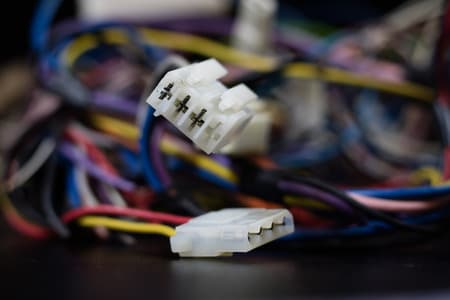
Confirm Pitch & Pin 1
Always verify 1.27mm/2.54mm pitch and mark pin 1 on both ends.
Use Proper IDC Tooling
Even pressure with an IDC press or correct crimp tool prevents faults.
Provide Strain Relief
Secure routing and clamps reduce fatigue and intermittent connections.
Overview: FRXCF16 ribbon cable connections
The phrase best-practices-for-connecting-frxcf16-ribbon-cable typically refers to the process of terminating, routing and testing a 16-conductor flat ribbon cable (commonly used with IDC connectors, shrouded headers or board-to-board adaptors). This guide covers physical handling, proper IDC termination, pin-mapping, polarity marking, strain relief, and basic troubleshooting with South African workshop notes on availability and lead times for parts.
What is FRXCF16 ribbon cable?
FRXCF16 is often a shorthand used by makers and procurement teams to specify a 16-way flat flexible cable assembly. These ribbons are typically 1.27mm pitch per conductor (or sometimes 2.54mm pitch in larger ribbon types) and are intended for IDC (insulation-displacement) connectors that bite through insulation to make contact. Confirm the pitch and conductor gauge on your part listing before ordering.
Key considerations before you start
- Verify pitch (1.27mm vs 2.54mm) and whether the mating connector is keyed or shrouded.
- Check conductor gauge (AWG) and insulation material for current capacity and temperature range.
- Decide whether you need pre-crimped assemblies or raw ribbon + IDC connectors for on-site termination.
- Plan cable routing and connector orientation to keep signals and power separated where possible.
Tools and parts you will need
- IDC crimp tool or bench vise (for reliable, even press on the connector).
- Sharp cable cutter and a small hook or pick for removing individual conductors if rework is needed.
- Marker or colored heat-shrink for polarity marking and strain relief.
- Multimeter for continuity and short testing before power-up.
- Replacement IDC connectors and shrouded housings matching the pitch and 16 pins.
Local sourcing note: Communica stocks a wide range of ribbon cable, IDC connectors, and crimp tools. Check Samrand branch stock or branch pickup pages for availability and lead times when planning projects for tertiary labs or classroom builds.
Safety and current limitations (practical guidance)
Typical 16-way ribbon cables use thin conductors better suited for signal-level currents (milliamps to a few hundred milliamps per conductor). For high-current rails, use multiple conductors in parallel or specify a heavier gauge cable. When estimating current, always account for derating in warm South African environments and allow headroom for inrush currents on motor or LED loads.
| Parameter | Typical value | Notes |
|---|---|---|
| Pitch | 1.27mm or 2.54mm | Confirm on connector datasheet |
| Conductor size | ~28-24 AWG | Smaller AWG -> higher resistance |
| Typical current rating | < 1A per conductor (signal) | Use parallel conductors for power |
Related Connectors, Wire & Cable Products
Discover quality connectors, wire & cable products related to Best Practices for Connecting FRXCF16 Ribbon Cable - Reliable Ribbon Connections in South Africa

Flat Ribbon Cable • 34way 28-awg • Coloured (price Per Meter)
Flat Ribbon Cable • 34way 28-awg • Coloured (price Per Meter)

Flat Ribbon Cable Multi Strand • 20way 28-awg • Grey Colour
Flat Ribbon Cable Multi Strand • 20way 28-awg • Grey Colour

Flat Ribbon Cable Multi Strand • 26way 28-awg • Grey Colour
Flat Ribbon Cable Multi Strand • 26way 28-awg • Grey Colour

Flat Ribbon Cable Multi Strand • 34way 28-awg • Grey Colour
Flat Ribbon Cable Multi Strand • 34way 28-awg • Grey Colour

Flat Ribbon Cable Multi Strand • 40way 28-awg • Grey Colour
Flat Ribbon Cable Multi Strand • 40way 28-awg • Grey Colour

Flat Ribbon Cable Multi Strand • 50way 28-awg • Grey Colour
Flat Ribbon Cable Multi Strand • 50way 28-awg • Grey Colour

Flat Ribbon Cable • 10way 28-awg • Coloured
Flat Ribbon Cable • 10way 28-awg • Coloured

Flat Ribbon Cable • 16way 28-awg • Coloured
Flat Ribbon Cable • 16way 28-awg • Coloured

Flat Ribbon Cable • 40way 28-awg • Coloured
Flat Ribbon Cable • 40way 28-awg • Coloured

Flat Ribbon Cable Multi Strand • 10way 28-awg • Grey Colour
Flat Ribbon Cable Multi Strand • 10way 28-awg • Grey Colour

Flat Ribbon Cable Multi Strand • 14way 28-awg • Grey Colour
Flat Ribbon Cable Multi Strand • 14way 28-awg • Grey Colour

Flat Ribbon Cable Multi Strand • 16way 28-awg • Grey Colour
Flat Ribbon Cable Multi Strand • 16way 28-awg • Grey Colour
Step-by-step: Terminating FRXCF16 with an IDC connector
Follow these steps to get a reliable termination when using a 16-pin IDC connector.
1. Measure and prepare
Cut the ribbon squarely using a sharp cutter. Leave a small service loop if the cable will be re-routed. Fan or straighten conductors only if the connector type requires individual placement; most IDC connectors accept the flat ribbon directly.
2. Align and orient
Verify pin 1 orientation on both the connector and the PCB/header. Use a marker or a colored strand/shrink to mark pin 1 on the cable. A common visual code is a red marker or a stripe along the edge.
3. Crimping technique
Use a proper IDC press or crimp tool and apply even pressure. If using a vise, place sacrificial pads to avoid crushing the connector. The aim is an even displacement of IDC tines into each conductor without tearing insulation excessively.
4. Strain relief and routing
Add mechanical strain relief close to the connector: cable ties, adhesive-backed strain relief, or a mechanical clamp. Keep the ribbon loop radius gentle; avoid tight bends that can fatigue conductors. Separate signal and power ribbons where possible to reduce interference.
5. Testing and verification
Before applying power, perform continuity and short tests with a multimeter. Check that each of the 16 conductors maps to the expected PCB pins and that there are no unintended shorts between adjacent conductors.
Pin-mapping example and ASCII wiring diagram
For a 16-pin ribbon with pin 1 marked by a red stripe, a typical header view (looking at the connector face) is:
Connector face (look into connector)
Pin:  1  2  3  4  5  6  7  8
Row A: 1  2  3  4  5  6  7  8
Row B: 9 10 11 12 13 14 15 16

When mating to a PCB header, verify whether pins 1-8 are the top row or bottom row based on orientation marks on the board.
Troubleshooting common faults
- Intermittent contact: re-seat the connector, re-crimp using correct tool, and inspect IDC teeth for damage.
- Shorted adjacent conductors: check for insulation cut-through; replace connector if insulation was pierced beyond trace area.
- Wrong pin order: re-check the stripe/pin 1 marking and rotate connector if the housing is reversible.
Practical examples and South African scenarios
Example 1 - University lab: A student lab using ribbon cables to link sensor arrays should label both ends and use cable routes that avoid hot test equipment. Buy spare IDC housings from local stock; budget ZAR 30-80 per connector as an estimate depending on brand and quantity (prices vary and are indicative).
Example 2 - Prototype production: Engineers moving from breadboard to enclosure designs can parallel two or more ribbon conductors for a 5V rail to safely carry larger currents; ensure connectors and pads on the PCB are rated for the combined current.
Best practices checklist
- Confirm pitch and conductor gauge before ordering or terminating.
- Mark pin 1 clearly on both cable and PCB side.
- Use proper IDC tooling for even pressure and reliable contact.
- Provide mechanical strain relief and secure routing to avoid flex fatigue.
- Test continuity and shorts with a DMM at both ends before powering.
- For power rails, use parallel conductors or dedicated power cables instead of ribbon conductors alone.
Sources
Communica supplies semiconductors and electronic components to industries such as automotive, electrical, automation, mining, and education.
Disclaimer: This content is for educational purposes only. Product availability, pricing, and specifications are subject to change. Always verify current details on the retailer's website before making a purchase. We may earn affiliate commissions from qualifying purchases.


Frequently Asked Questions
Get answers to common questions about Connectors Wire And Cable
Why Choose Communica?
*Free Shipping
Free shipping for orders over ZAR 1,000.00.
7-Day Returns
Get a full refund if you had the product for less than 7 days.
Quick Delivery
Nationwide delivery within 2 - 4 working days.
