
Benefits of Using Linear Ball Bearings in 3D Printing: Precision, Speed & Longevity
Discover how linear ball bearings improve 3D printer motion: reduced friction, better accuracy, selection advice, calculations, and South Africa buying notes.
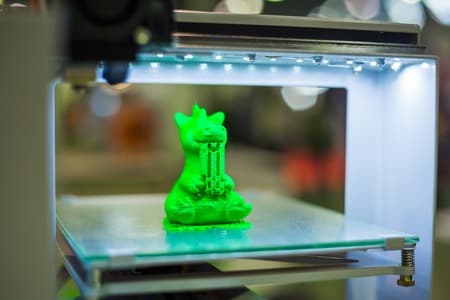
Lower Friction & Better Speed
Rolling contact reduces friction for smoother, faster axis movement.
Improved Print Accuracy
Consistent motion reduces artifacts and improves repeatability.
Practical Local Tips
Check rod straightness, stock availability, and include spares for SA labs.
Overview: What Linear Ball Bearings Bring to 3D Printing
Linear ball bearings are rolling-element bearings designed to provide low-friction linear motion along a hardened shaft or rail. In 3D printers they commonly replace plain (sleeve) bushings or poorly aligned slides to deliver smoother axes, higher printing speed, and better dimensional accuracy. This guide covers the benefits of using linear ball bearings in 3D printing, selection criteria, simple calculations, installation notes, and common troubleshooting scenarios relevant to South African makers, students, and workshop technicians.
Why makers upgrade to linear ball bearings
- Reduced friction: rolling contact lowers static and dynamic friction, improving responsiveness and enabling higher feedrates with less motor torque.
- Improved repeatability: consistent motion reduces axis backlash and stick-slip, which helps with dimensional accuracy and surface finish.
- Longer service intervals: where installed and maintained correctly, ball bearings often show lower wear rates than soft polymer bushings under similar loads.
- Higher RPM capability: suitable for fast continuous moves in coreXY, belt, or leadscrew systems when paired with appropriate shafts.
Types and common configurations
Common linear bearing types used in hobby and educational 3D printers include LM8UU-style radial ball bearings on hardened smooth rods, linear ball bearing blocks on hardened rails, and fully supported linear guides for higher precision. Choice depends on desired accuracy, load, and budget.
| Bearing Type | Typical Use | Pros | Cons |
|---|---|---|---|
| LM8UU (open radial) | X/Y axes on hobby printers | Low cost, easy replacement | Requires precise rod straightness; can rattle if misaligned |
| Linear ball blocks on rails | Higher precision prints; gantry support | Better rigidity, less play | Higher cost; rails must be hardened |
| Supported linear guides | CoreXY, industrial-style printers | High accuracy and load capacity | Most expensive; heavier |
Local availability and brands
In South Africa you can often source linear shafts, LM-type bearings, and rail systems from local distributors and maker suppliers. Typical stocked items include hardened steel shafts (e.g., 8mm/12mm), LM8UU bearings, flanged variants, and complete carriage blocks. Check stock levels and lead times at branches when planning a build or repair - popular hobby parts usually have short lead times, but precision rails and specialty blocks may take longer and can be quoted for procurement teams requiring VAT invoices. For sourcing common sizes like 6mm shafts and bearings, see where to buy 6mm linear ball bearings in South Africa.
Standards, specs and key metrics to compare
When evaluating linear ball bearings, compare shaft hardness/finish, bearing internal clearance, dynamic load rating, and expected life. For budget hobby builds, shaft straightness and surface finish are often the limiting factor rather than the bearing itself.
| Spec | Why it matters | Practical check |
|---|---|---|
| Shaft diameter & straightness | Affects runout and wear | Use a straight edge or runout test; avoid bent rods |
| Dynamic load rating (N) | Predicts bearing life under load | Select rating comfortably above expected loads |
| Internal clearance | Affects stiffness and pre-load needs | Tighter clearance gives rigidity but increases friction |
Related 3D Printing & Accessories Products
Discover quality 3d printing & accessories products related to Benefits of Using Linear Ball Bearings in 3D Printing: Precision, Speed & Longevity

3d Printer Heat Resistant Tape (polyimide Film)-high Insulation. 20mm X 33mt
3d Printer Heat Resistant Tape (polyimide Film)-high Insulation. 20mm X 33mt

8mm X 500mm Right Handed Lead Screw With Brass Nut
8mm X 500mm Right Handed Lead Screw With Brass Nut

Lm8uu Linear Bearing. Id 8mm, Od 15mm, Height 24mm
Lm8uu Linear Bearing. Id 8mm, Od 15mm, Height 24mm

Lm12uu Linear Bearing - 12mm Id - 21mm Od - 30mm Height - Communica
Lm12uu Linear Bearing - 12mm Id - 21mm Od - 30mm Height - Communica

3d Printer Bed Leveling Spring Set Of 4 - Communica
3d Printer Bed Leveling Spring Set Of 4 - Communica

Bowden Mk8 1.75mm 3d Printer Extruder With Nema 17 Left Hand L Bracket Mount
Bowden Mk8 1.75mm 3d Printer Extruder With Nema 17 Left Hand L Bracket Mount

1 Meter Blue Teflon Tube (ptfe) For 1.75mm Filament
1 Meter Blue Teflon Tube (ptfe) For 1.75mm Filament

0.4mm Makerbot Mk8 Stainless Steel Nozzle
0.4mm Makerbot Mk8 Stainless Steel Nozzle

3d Printer Extruder Nozzle 0.4mm
3d Printer Extruder Nozzle 0.4mm


3d Printer Teflon Tube - White - 1.75mm/3mm - 1 Meter Length
3d Printer Teflon Tube - White - 1.75mm/3mm - 1 Meter Length

1 Meter White Teflon Tube Feeder Pipe For 1.75mm Filament Id:2mm, Od:4mm. Temp:-190 To 280 °c
1 Meter White Teflon Tube Feeder Pipe For 1.75mm Filament Id:2mm, Od:4mm. Temp:-190 To 280 °c
Selection Criteria: Matching bearings to your printer
Choose bearings based on axis load, desired print speed, and available budget. For most desktop FDM printers, LM8UU-style bearings on 8mm hardened rods are a cost-effective upgrade. For larger beds, high-speed gantries or multi-axis printers, consider supported rails or linear guides for improved stiffness.
Simple life and load calculation
A commonly used bearing life approximation is based on the dynamic load rating (C) and applied load (F). The basic relation for relative life (L) in millions of metres is:
L = (C / F)^3
Where C and F are in the same units (e.g., Newtons). This gives a comparative estimate: higher C or lower F increases bearing life. For hobby use, treat the result as an order-of-magnitude guide rather than an exact prediction. When quoting for projects in ZAR, include estimated replacement cycles and local labour for maintenance when budgeting.
Installation tips and an ASCII alignment diagram
Proper alignment is essential. Misalignment causes uneven load, increased wear, and binding. The following ASCII sketch shows a simple two-rod carriage arrangement (top view):
  \======== X-axis shaft (hardened rod) ========/
  |  O===[LM8UU]===O   <-- carriage bearing pair    |
  |                                            |
  |  O===[LM8UU]===O   <-- second shaft/rod pair  |
  /--------------------------------------------\
When assembling: clean shafts, press bearings squarely into the carriage or mount, and secure end supports to avoid axial play. Apply light high-quality grease suited for bearings; avoid over-greasing which can attract dust and filament debris.
Troubleshooting common issues
- Binding or rough motion: check shaft straightness, replace damaged rods, confirm bearing bore size matches shaft diameter.
- Noise and chatter: inspect for debris in the bearing, verify lubrication, and confirm bearings are not overloaded.
- Excessive play: consider replacing with preloaded blocks or switching to supported linear guides for higher stiffness.
South Africa practical notes
Stock levels for shafts and bearings are generally good for common sizes (8mm, 12mm); specialised rails may require lead time or quote. For student labs and education use, include spare bearings and shafts in the kit budget (example estimate: a set of 4 LM8UU + 2 rods ~ ZAR 150-400 depending on quality and supplier). Ask your supplier for VAT invoices if purchasing through institutional procurement.
Final recommendations
For hobby printers, upgrading to quality LM-style ball bearings and hardened rods is a cost-effective way to improve print quality and speed. For larger or precision-focused builds, invest in linear rails or supported guides. Always match bearing type to your load, alignment capability, and maintenance plan. When sourcing parts locally, check branch stock and lead times and consider buying slightly higher-spec shafts if you expect heavier use or occasional misuse in classroom settings.
Sources
Communica supplies semiconductors and electronic components to industries such as automotive, electrical, automation, mining, and education.
Disclaimer: This content is for educational purposes only. Product availability, pricing, and specifications are subject to change. Always verify current details on the retailer's website before making a purchase. We may earn affiliate commissions from qualifying purchases.


Frequently Asked Questions
Get answers to common questions about 3d Printing And Accessories
Why Choose Communica?
*Free Shipping
Free shipping for orders over ZAR 1,000.00.
7-Day Returns
Get a full refund if you had the product for less than 7 days.
Quick Delivery
Nationwide delivery within 2 - 4 working days.
