
Benefits of High-Quality Audio Cables for Electronics and Prototyping Projects
Learn the benefits of high-quality audio cables for makers, students and engineers in South Africa - selection tips, specs, wiring, and local sourcing.
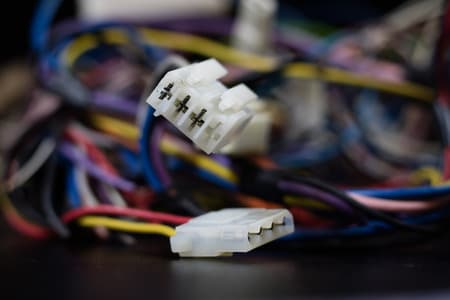
Signal Integrity
Better cables reduce noise, capacitance loss and ensure cleaner audio transfer.
Practical Durability
Quality jackets and connectors survive classroom and maker-space use.
Local Availability
Choose stocked brands, branch pickup and VAT invoices for South African projects.
Overview: why cable quality matters
High-quality audio cables play an outsized role in electronics, audio prototyping and educational projects. The benefits-of-high-quality-audio-cables-for-projects include better signal transfer, lower susceptibility to interference, longer usable life in bench and field environments, and easier troubleshooting during development. Whether you're wiring analogue audio for a Raspberry Pi HAT project, building a test rig in a university lab, or specifying patch leads for a small studio in Gauteng, the right cable choice affects measurable performance and day-to-day reliability.
Key electrical factors
Important electrical attributes to consider are impedance, capacitance per metre, conductor gauge, and shielding topology. Lower capacitance is generally better for long analogue runs; consistent impedance matters for balanced lines and professional audio; thicker conductors (lower AWG) reduce resistive losses for long runs or higher currents. Shielding type (braid, foil, or combined) determines rejection of mains hum and RF in noisy lab or industrial environments.
Mechanical and practical considerations
Durability, strain relief, connector quality, and flexibility are practical benefits of buying better cables. Robust jackets withstand repeated movement in classroom or maker-space use. Good connectors (soldered or quality crimped) keep contact resistance low and simplify repeated plug/unplug cycles. For procurement in South Africa, consider local availability and branch collection to reduce lead time and VAT invoicing for institutional purchases.
Common use cases in South African projects
- University audio labs and student projects using analogue mixers and oscilloscope measurement.
- Makers building audio-capable microcontroller projects (e.g., Arduino or Raspberry Pi) requiring clean analogue lines.
- Small studios and community radio where reliable patch leads and balanced cables reduce maintenance time.
Specification comparison: quick reference
| Spec | Typical Value (consumer) | Recommended for projects |
|---|---|---|
| Conductor (AWG) | 24-28 | 20-24 for runs >5m |
| Capacitance (pF/m) | 50-100 | < 60 for long analogue runs |
| Shielding | Basic braid | Foil + braid for best rejection |
| Impedance (unbalanced) | n/a | Use balanced 110-150 Ohm for pro lines |
Practical tip: for many student and maker projects under 3-5 metres, a quality unbalanced 3.5mm or RCA cable with good shielding and solid connectors is adequate. For runs beyond that or noisy environments, choose balanced lines or shielded XLR/TRS options.
To explore cable types and compatible connectors, see our collections for related parts and accessories on the site: Shop by category. For brand-specific options, review popular manufacturers we stock: Shop by brand.
Related Connectors, Wire & Cable Products
Discover quality connectors, wire & cable products related to Benefits of High-Quality Audio Cables for Electronics and Prototyping Projects

Communica Cab02-4riprdbk Audio Cable
Communica Cab02-4riprdbk Audio Cable


Cab Hdf195 | Coaxial Cable Low Loss 50r, Freq :30mhz@6.50db/100m, Inner Conductor:1/0.94, Insulation Pe:2.8, Jacket Pvc O/d4.95>12.5n/mm, Min Bend Rad
Cab Hdf195 | Coaxial Cable Low Loss 50r, Freq :30mhz@6.50db/100m, Inner Conductor:1/0.94, Insulation Pe:2.8, Jacket Pvc O/d4.95>12.5n/mm, Min Bend Rad

Cab2068r | Microphone Cable • Red Colour • 60x0.8 Mm (2 Core) Ofc Copper Strands • Screened : 128x0.1 Mm (16/8/0.1 Mm
Cab2068r | Microphone Cable • Red Colour • 60x0.8 Mm (2 Core) Ofc Copper Strands • Screened : 128x0.1 Mm (16/8/0.1 Mm

Cab2068bu | Microphone Cable • Blue Colour • 60x0.8 Mm (2 Core) Ofc Copper Strands • Screened : 128x0.1 Mm (16/8/0.1 Mm
Cab2068bu | Microphone Cable • Blue Colour • 60x0.8 Mm (2 Core) Ofc Copper Strands • Screened : 128x0.1 Mm (16/8/0.1 Mm

Cab1060 | Audio Connector Cable • Black/grey Colour • 10x0.12 Mm (2 Core) Ofc Bare Copper Strands • Screened : 38x0.11 Mm
Cab1060 | Audio Connector Cable • Black/grey Colour • 10x0.12 Mm (2 Core) Ofc Bare Copper Strands • Screened : 38x0.11 Mm

Cab2016 | Microphone Cable • Grey Colour • 16x0.2 Mm (4 Core) Ofc Tinned Copper Strands • Screened : 112x0.12 Mm (16/7/0.12 Mm) Ofc Tinned Copper Bra
Cab2016 | Microphone Cable • Grey Colour • 16x0.2 Mm (4 Core) Ofc Tinned Copper Strands • Screened : 112x0.12 Mm (16/7/0.12 Mm) Ofc Tinned Copper Bra

Cab2018bk | Microphone Cable • Black Colour • 18x0.1 Mm (2 Core) Ofc Copper Strands • Screened : 128x0.11 Mm (16/8/0/11 Mm) Ofc Copper Braided
Cab2018bk | Microphone Cable • Black Colour • 18x0.1 Mm (2 Core) Ofc Copper Strands • Screened : 128x0.11 Mm (16/8/0/11 Mm) Ofc Copper Braided

Cab116 | Audio Connector Cable • Black Colour • 18x0.1 Mm (4 Core) Ofc Bare Copper Strands • Screened : 4x36x0.11 Mm
Cab116 | Audio Connector Cable • Black Colour • 18x0.1 Mm (4 Core) Ofc Bare Copper Strands • Screened : 4x36x0.11 Mm

Cab1088 | Audio Connector Cable • Black/grey Colour • 10x0.12 Mm Ofc Bare Copper Strands • Screened : 26x0.1 Mm
Cab1088 | Audio Connector Cable • Black/grey Colour • 10x0.12 Mm Ofc Bare Copper Strands • Screened : 26x0.1 Mm

Cab2088 | Microphone Cable • Black Colour • 20x0.12 Mm² Ofc Copper Strands • 56x0.11 Mm Ofc Copper Spiral Wrapped
Cab2088 | Microphone Cable • Black Colour • 20x0.12 Mm² Ofc Copper Strands • 56x0.11 Mm Ofc Copper Spiral Wrapped

Cab6189 | Loud Speaker Cable • Transparent Colour • 2x1.5 Mm² • 189x0.1 Mm (27/7/0.1 Mm) Ofc Bare Copper Strands
Cab6189 | Loud Speaker Cable • Transparent Colour • 2x1.5 Mm² • 189x0.1 Mm (27/7/0.1 Mm) Ofc Bare Copper Strands
Selection criteria: choosing the right audio cable
Use a decision flow when selecting cables: define signal type (analogue vs digital), run length, environment (quiet lab vs noisy workshop), and connector type. Budget for slightly better cables for projects that will be reused across classes or client demos - the cost is often offset by reduced troubleshooting time.
Example calculations and wiring notes
Ohm's Law and simple signal loss estimates help for long runs. For resistive loss in a conductor: Vdrop = I * R. Use conductor resistance per metre (R) to estimate voltage or level loss. For typical audio line currents (microamps to milliamps), resistive losses are negligible; capacitance-induced high-frequency roll-off is usually the limiting factor for long analogue cables.
ASCII wiring for a balanced TRS connection:
Tip = Hot (+)
Ring = Cold (-)
Sleeve = Shield/Ground

   [TRS plug]      [Balanced input]
    Tip  ---+--->  Pin 2 (hot)
    Ring  ---+--->  Pin 3 (cold)
    Sleeve ----->  Pin 1 (ground)
Troubleshooting common audio cable issues
- Hum or mains buzz: check for broken shielding, ground loops, or nearby power cables; try balanced cabling or repositioning.
- Intermittent signal: inspect connectors for wear, cold solder joints or strained contacts; replace cables with good strain relief.
- High-frequency loss over long runs: select lower-capacitance cable or use a line-level buffer/amplifier.
Accessories and compatibility guidance
Match connectors to device I/O: 3.5mm for many microcontroller audio modules, RCA for consumer stereo equipment, TRS/XLR for professional gear. Consider buying connector adapters, panel-mount connectors, and colour-coded jackets for lab clarity. Communica branches support collection and inspection; check stock and branch hours before purchasing: Branches & trading hours.
Availability, brands and local considerations
When sourcing in South Africa, note lead times for specialised shielded or balanced multicore cables may be longer. For quick prototyping, Communica stocks a range of general-purpose and higher-spec audio cables and connectors in our all-products index: All products. Popular maker-friendly brands and components carried by Communica are useful for students and labs - check brand pages for alternatives and compatible parts.
Practical South African example
Example: a student project in Cape Town requires a 7 m analogue line to connect a microcontroller DAC to a mixer. Choosing a shielded 22 AWG cable with capacitance ~55 pF/m and quality TRS connectors reduces high-frequency attenuation compared to a thin, high-capacitance cable. If a buffer amplifier is unavailable, the cable specification becomes critical. For institutional purchases, request VAT invoices and consider branch pickup to avoid courier delays and extra costs.
Sources
- Communica - About Us and company background
- Communica - Collections and product categories
- Audio cable fundamentals (technical notes)
- Effect of cable capacitance on audio signals (practical guide)
For hands-on projects and compatible parts, visit the Communica homepage to browse stock and resources: Communica homepage.
Communica supplies semiconductors and electronic components to industries such as automotive, electrical, automation, mining, and education.
Disclaimer: This content is for educational purposes only. Product availability, pricing, and specifications are subject to change. Always verify current details on the retailer's website before making a purchase. We may earn affiliate commissions from qualifying purchases.


Frequently Asked Questions
Get answers to common questions about Connectors Wire And Cable
Why Choose Communica?
*Free Shipping
Free shipping for orders over ZAR 1,000.00.
7-Day Returns
Get a full refund if you had the product for less than 7 days.
Quick Delivery
Nationwide delivery within 2 - 4 working days.
