
Audio cable options for makers and hobbyists: choosing the right cable for your project
Practical guide to audio cable types, wiring, troubleshooting and local sourcing for South African makers, students and technicians.
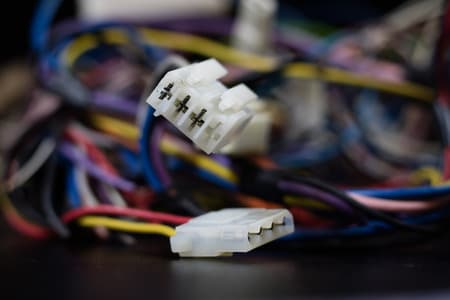
Pick cable by use
Choose shielded, balanced or speaker cable based on signal type and run length.
Wiring matters
Correct tip/ring/sleeve wiring and good strain relief prevent noise and failures.
Local procurement tips
Check Communica stock, branch pickup and VAT invoicing for education and bulk orders.
Overview: why cable choice matters
Audio cable options for makers and hobbyists affect signal quality, noise, durability and ease of assembly. Whether you are wiring a Raspberry Pi audio HAT, building a pedal, assembling speaker leads for a classroom demo or patching a synthesiser, understanding cable types, connectors and wiring techniques helps you avoid hum, poor frequency response and mechanical failures. This guide focuses on practical, local-aware advice for South African makers, students and technicians sourcing parts from Communica.
Common cable types and when to use them
Below are the primary audio cable options for typical maker and hobbyist projects.
- Unshielded patch cable (e.g., jumper wire, ribbon) - low cost; for short, low-gain connections inside enclosures.
- Shielded instrument cable (TS) - single conductor plus shield; good for guitar/pickup signals or single-ended connections up to a few metres.
- Balanced cable (TRS / XLR with two conductors + shield) - reduces noise for longer runs or in electrically noisy environments.
- Speaker cable (two large conductors, no shield) - for amplified outputs feeding passive speakers; focuses on low resistance rather than shielding.
- Coax (for powered subwoofers or consumer line-level) - sometimes used for RCA connections with central conductor and shield.
Quick spec comparison
| Cable Type | Best for | Typical length | Key advantage |
|---|---|---|---|
| Unshielded jumper | Internal wiring, breadboards | < 30 cm | Flexible, cheap |
| Instrument (TS) | Guitars, single-ended patching | 0.5-10 m | Simple, rugged |
| Balanced (TRS/XLR) | Long runs, mixers, pro audio | > 10 m | Noise rejection |
| Speaker cable | Amplifier to speaker | Varies by power | Low resistance, high current |
Connector choices and wiring basics
Connector selection often determines which cable type you need. Common maker-friendly connectors include 3.5mm TRS, 1/4" TS/TRS, RCA, XLR and screw-terminal speaker blocks. For compact projects, 3.5mm TRS is widespread but remember many consumer outputs are unbalanced (tip = left, ring = right, sleeve = ground).
Simple wiring diagrams (ASCII)
Stereo 3.5mm TRS plug wiring to a PCB header:
TRS plug pinout:
  Tip  = Left  (L)
  Ring = Right (R)
  Sleeve = Ground (GND)

 PCB header mapping (example):
  [L] -- Tip
  [R] -- Ring
  [G] -- Sleeve
Balanced TRS wiring (where TRS carries a balanced mono signal):
  Tip  = Hot (+)
  Ring = Cold (-)
  Sleeve = Shield/Ground
Practical tip: solder vs. solderless
Soldered connections are more durable for repeated handling; heatshrink and strain relief extend life. For prototyping, screw terminals and phone plugs with detachable cables speed up iteration. Communica stocks a range of connectors and cables useful for both workflows - explore category options at where to buy audio cables in South Africa for quick browsing.
Selection criteria for makers and students
- Signal level: line-level signals tolerate small cable losses; instrument and pickup signals are higher impedance and more noise-sensitive.
- Run length: use balanced cable for runs longer than ~3-5 m to reduce hum and interference.
- Environment: in classrooms or workshops with lots of mains wiring, choose shielded or balanced cables.
- Flexibility and durability: for portable gear, choose stranded conductors and robust jackets.
- Budget and availability: local stock and lead times matter - check stock in Samrand or branches before planning projects via best audio cables for DIY electronics.
Related Connectors, Wire & Cable Products
Discover quality connectors, wire & cable products related to Audio cable options for makers and hobbyists: choosing the right cable for your project

Communica Cab02-4riprdbk Audio Cable
Communica Cab02-4riprdbk Audio Cable


Cab Hdf195 | Coaxial Cable Low Loss 50r, Freq :30mhz@6.50db/100m, Inner Conductor:1/0.94, Insulation Pe:2.8, Jacket Pvc O/d4.95>12.5n/mm, Min Bend Rad
Cab Hdf195 | Coaxial Cable Low Loss 50r, Freq :30mhz@6.50db/100m, Inner Conductor:1/0.94, Insulation Pe:2.8, Jacket Pvc O/d4.95>12.5n/mm, Min Bend Rad

Cab2068r | Microphone Cable • Red Colour • 60x0.8 Mm (2 Core) Ofc Copper Strands • Screened : 128x0.1 Mm (16/8/0.1 Mm
Cab2068r | Microphone Cable • Red Colour • 60x0.8 Mm (2 Core) Ofc Copper Strands • Screened : 128x0.1 Mm (16/8/0.1 Mm

Cab2068bu | Microphone Cable • Blue Colour • 60x0.8 Mm (2 Core) Ofc Copper Strands • Screened : 128x0.1 Mm (16/8/0.1 Mm
Cab2068bu | Microphone Cable • Blue Colour • 60x0.8 Mm (2 Core) Ofc Copper Strands • Screened : 128x0.1 Mm (16/8/0.1 Mm

Cab1060 | Audio Connector Cable • Black/grey Colour • 10x0.12 Mm (2 Core) Ofc Bare Copper Strands • Screened : 38x0.11 Mm
Cab1060 | Audio Connector Cable • Black/grey Colour • 10x0.12 Mm (2 Core) Ofc Bare Copper Strands • Screened : 38x0.11 Mm

Cab2016 | Microphone Cable • Grey Colour • 16x0.2 Mm (4 Core) Ofc Tinned Copper Strands • Screened : 112x0.12 Mm (16/7/0.12 Mm) Ofc Tinned Copper Bra
Cab2016 | Microphone Cable • Grey Colour • 16x0.2 Mm (4 Core) Ofc Tinned Copper Strands • Screened : 112x0.12 Mm (16/7/0.12 Mm) Ofc Tinned Copper Bra

Cab2018bk | Microphone Cable • Black Colour • 18x0.1 Mm (2 Core) Ofc Copper Strands • Screened : 128x0.11 Mm (16/8/0/11 Mm) Ofc Copper Braided
Cab2018bk | Microphone Cable • Black Colour • 18x0.1 Mm (2 Core) Ofc Copper Strands • Screened : 128x0.11 Mm (16/8/0/11 Mm) Ofc Copper Braided

Cab116 | Audio Connector Cable • Black Colour • 18x0.1 Mm (4 Core) Ofc Bare Copper Strands • Screened : 4x36x0.11 Mm
Cab116 | Audio Connector Cable • Black Colour • 18x0.1 Mm (4 Core) Ofc Bare Copper Strands • Screened : 4x36x0.11 Mm

Cab1088 | Audio Connector Cable • Black/grey Colour • 10x0.12 Mm Ofc Bare Copper Strands • Screened : 26x0.1 Mm
Cab1088 | Audio Connector Cable • Black/grey Colour • 10x0.12 Mm Ofc Bare Copper Strands • Screened : 26x0.1 Mm

Cab2088 | Microphone Cable • Black Colour • 20x0.12 Mm² Ofc Copper Strands • 56x0.11 Mm Ofc Copper Spiral Wrapped
Cab2088 | Microphone Cable • Black Colour • 20x0.12 Mm² Ofc Copper Strands • 56x0.11 Mm Ofc Copper Spiral Wrapped

Cab6189 | Loud Speaker Cable • Transparent Colour • 2x1.5 Mm² • 189x0.1 Mm (27/7/0.1 Mm) Ofc Bare Copper Strands
Cab6189 | Loud Speaker Cable • Transparent Colour • 2x1.5 Mm² • 189x0.1 Mm (27/7/0.1 Mm) Ofc Bare Copper Strands
Cable calculations and practical examples
While audio voltages are small, resistance matters for speaker runs. Use the basic voltage drop concept: higher conductor resistance can reduce power to a speaker. For a quick estimate, choose speaker cable with sufficiently low DC resistance. Example: for a 4 ohm speaker and a short run, 16 AWG (~0.013 ohm/m) is usually fine; for longer runs or higher power choose 14 AWG or 12 AWG. These are guidelines - check your amplifier's specs and cable lengths.
Example: wiring a small active speaker with RCA input
If you are connecting a Raspberry Pi DAC hat output (line-level) to an active speaker with RCA input, use a short shielded RCA cable or a 3.5mm-to-RCA lead. Keep the run under 3 m where possible to avoid noise pickup. For DIY enclosures, route the cable away from power supplies and use ferrites if you detect interference. Communica carries relevant interconnects and HAT accessories - see the All Products index at All Products.
Troubleshooting common audio cable problems
- Hum or buzz: try balanced cables, shorten runs, separate from mains wiring, or switch to a different ground reference.
- Intermittent signal: suspect broken conductors or poor solder joints; test continuity with a multimeter from the test equipment category.
- Thin or weak sound: check for mis-wiring (e.g., only tip connected), low-gain source settings, or excessive cable resistance for speaker lines.
Local considerations: stock and budgeting - South African makers should plan for variable lead times on niche cables and connectors. For tertiary labs ordering in bulk, request an itemised VAT invoice and account quote via Communica's trade services; see company background at About Us.
Recommended accessories and compatibility notes
- Heatshrink and cable glands for strain relief on soldered plugs.
- Ferrite beads for high-frequency interference on digital audio lines.
- Quality solder and flux for reliable joints; for students, prefabricated cables speed testing.
Sources
- Theory of balanced audio lines - Rane Commercial
- Audio cable basics and terminology - Sound on Sound
- Raspberry Pi audio hardware notes - Raspberry Pi Foundation
If you need to compare specific cable options or confirm local availability and lead times, check Communica's shop by brand and collections pages for parts commonly used by makers: Shop by Brand and Shop by Category. For branch pickups and account services, consult Branches & Trading Hours.
This guide aims to help South African makers select the right audio cable for clarity, reliability and ease of assembly. When in doubt, test with a short shielded cable first and iterate based on the observed noise and level in your environment.
Communica supplies semiconductors and electronic components to industries such as automotive, electrical, automation, mining, and education.
Disclaimer: This content is for educational purposes only. Product availability, pricing, and specifications are subject to change. Always verify current details on the retailer's website before making a purchase. We may earn affiliate commissions from qualifying purchases.


Frequently Asked Questions
Get answers to common questions about Connectors Wire And Cable
Why Choose Communica?
*Free Shipping
Free shipping for orders over ZAR 1,000.00.
7-Day Returns
Get a full refund if you had the product for less than 7 days.
Quick Delivery
Nationwide delivery within 2 - 4 working days.
